

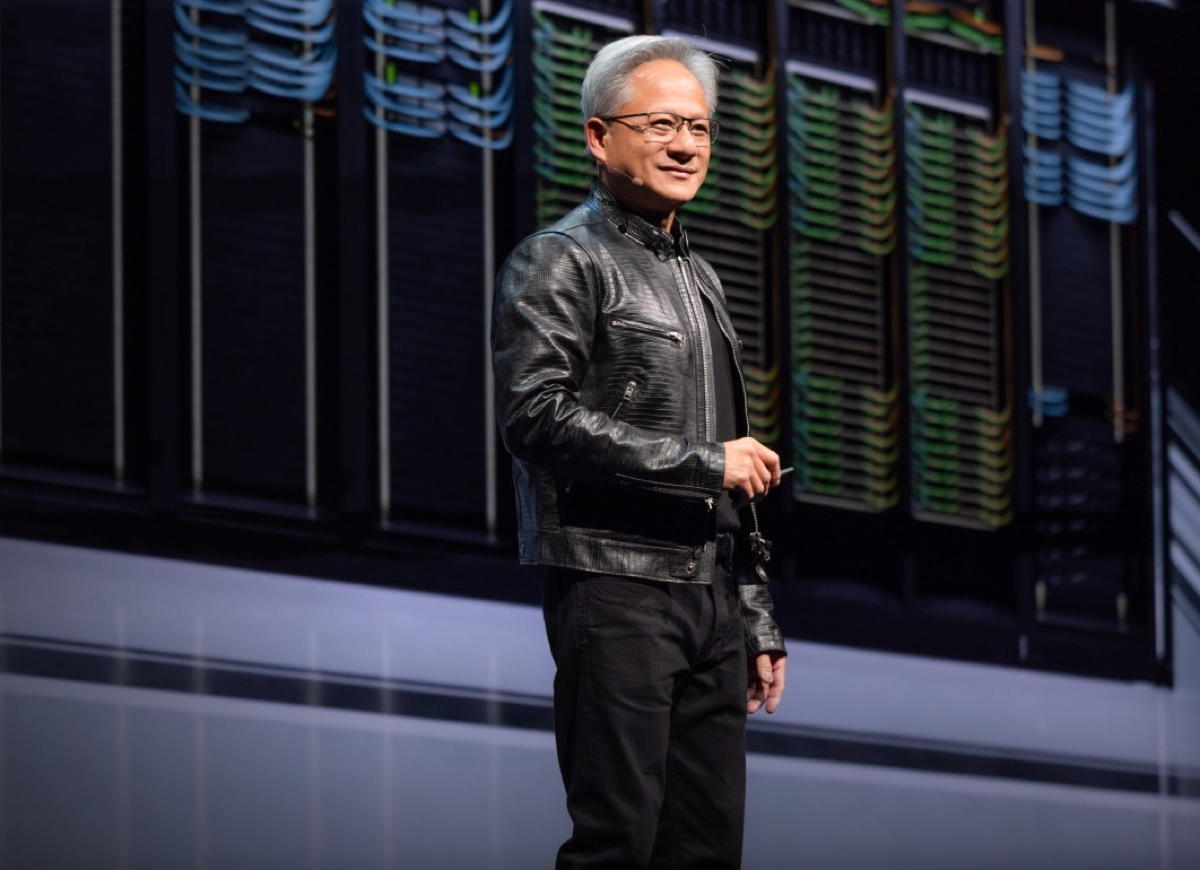
Nvidia chief executive Jensen Huang has cast doubt on a speculated $100 billion investment in OpenAI, stating that such a move is "probably not in the cards." Speaking at a Morgan Stanley conference, Huang addressed the ongoing speculation surrounding the relationship between the two generative AI leaders, noting that OpenAI's expected initial public offering (IPO) this year changes the investment landscape.
"Because of the expected IPO, this might be the last time we'll have the opportunity to invest in a consequential company like this," Huang said, though he clarified that the massive $100 billion figure is unlikely. Instead, Nvidia recently participated in a much smaller $30 billion funding round for OpenAI, part of a broader trend of investments in AI startups.
Key Facts from the Announcement
- Nvidia CEO Jensen Huang said the company will "probably" not invest $100 billion in OpenAI.
- The reason cited is OpenAI's expected IPO, possibly within the year.
- Nvidia recently invested $30 billion in OpenAI as part of a funding round.
- Huang also noted a $10 billion investment in Anthropic, another AI startup, calling it likely the last such chance for that company due to its own IPO expectations.
- The comments were made at a Morgan Stanley conference, addressing months of speculation about Nvidia-OpenAI relations.
- In September, Nvidia had floated a $100 billion investment tied to chip deployments, but the deal stalled and was never finalized.
- The AI boom's economics are shifting, with massive data center costs and resource consumption drawing backlash.
Speculation and Background
The relationship between Nvidia and OpenAI has been a focal point of the generative AI boom. Nvidia's graphics processing units (GPUs) have become the essential hardware for training large language models, making OpenAI one of its most important customers. In September, Nvidia announced plans to invest up to $100 billion over several years, with rounds tied to OpenAI's deployment of Nvidia chips in data centers. However, the agreement lacked details and ultimately stalled by January.
Huang's latest remarks suggest that the earlier speculation was overblown. The $100 billion figure was never formalized, and the changing economic realities of AI infrastructure have made such large commitments less attractive. Data centers required to power advanced AI models consume enormous amounts of electricity, water, and land, leading to rising costs and community opposition. This has forced companies like Nvidia and its partners to reassess their investment strategies.
The $10 Billion Anthropic Investment
Alongside the OpenAI discussion, Huang addressed Nvidia's investment in Anthropic, another leading AI startup. He described the $10 billion investment as likely "the last" opportunity to invest in Anthropic before its expected IPO. Anthropic, founded by former OpenAI employees, has rapidly emerged as a competitor in the AI space, developing models focused on safety and ethics. The investment underscores Nvidia's strategy to lock in key customers while also diversifying its portfolio beyond OpenAI.
Changing Economics of the AI Boom
The AI industry has undergone a significant shift in recent months. Last year's euphoric announcements have given way to the practical realities of building and operating massive data centers. These facilities require vast amounts of energy—often exceeding the output of small power plants—and significant water resources for cooling. Local communities have begun pushing back against planned data center campuses, citing environmental concerns and strain on public utilities.
Nvidia itself has faced questions about the sustainability of its growth. The company's GPU sales have skyrocketed as AI companies rush to build out computing capacity, but the capital intensity of the industry may be reaching a tipping point. Huang acknowledged during the conference that "the economics of AI are changing," and that both startups and established players need to adjust their expectations.
Historical Context: The Nvidia-OpenAI Partnership
Nvidia and OpenAI share a long history. OpenAI was one of the first to adopt Nvidia's GPUs for deep learning research, and Nvidia has supplied custom chips to the startup since its early days. The partnership helped fuel OpenAI's development of GPT-3, GPT-4, and other breakthroughs. However, as OpenAI grew and attracted major investments from Microsoft, the dynamics shifted. Nvidia's potential investment was seen as a way for the chipmaker to secure a stake in the most prominent AI company, ensuring continued demand for its hardware.
The speculated $100 billion investment would have been one of the largest corporate investments in a single startup. For comparison, Microsoft has invested over $13 billion in OpenAI. The size of the proposed figure highlighted Nvidia's outsized role in the AI ecosystem, but also raised concerns about market concentration and antitrust risks.
IPO Speculation and Market Impact
OpenAI's potential IPO has been a subject of intense speculation. The company is valued at around $80 billion after its latest funding rounds, and an IPO would be one of the most anticipated in the tech sector. Huang's comments suggest that Nvidia prefers to invest in pre-IPO companies where they can potentially reap higher returns, but the risk of missing out on a blockbuster IPO also influences decisions. The $30 billion investment made last week may be seen as a more cautious approach, allowing Nvidia to maintain a relationship without overexposing itself to a single entity.
The news has ripple effects across the industry. AI startups dependent on Nvidia hardware may feel reassured that the chipmaker remains committed to the ecosystem, albeit with more measured investments. Meanwhile, investors in OpenAI and Anthropic will closely watch how these relationships evolve post-IPO.
Environmental and Social Concerns
One of the underappreciated aspects of the AI boom is its environmental footprint. The data centers required to train and run AI models consume prodigious amounts of energy. A single training run for a large model like GPT-4 can use as much electricity as hundreds of homes in a year. Nvidia's chips are more efficient than some alternatives, but the overall demand is still enormous. Communities in regions like Northern Virginia, Ireland, and Singapore have already protested new data center constructions, citing noise, water usage, and carbon emissions.
Huang acknowledged these challenges in his remarks, noting that "we must find sustainable ways to power the next generation of AI." Nvidia has been working on more energy-efficient designs and collaborating with utilities to source renewable energy. However, the economic realities of building huge infrastructure are likely to slow the pace of expansion, which in turn affects investment decisions like the one with OpenAI.
The AI industry is at a crossroads. The initial rush to build the largest models is giving way to a more cautious phase where profitability and sustainability take precedence. Nvidia's decision to probably avoid a $100 billion bet on OpenAI reflects this broader trend. Companies are realizing that while AI has enormous potential, the path to realizing it requires careful financial and environmental planning.
As the generative AI landscape continues to evolve, the interplay between chipmakers, startups, and investors will shape the industry for years to come. Huang's comments at the Morgan Stanley conference serve as a reality check against the hype, reminding the market that even the most powerful technology must contend with the constraints of economics and public acceptance.
Source: Silicon UK News