

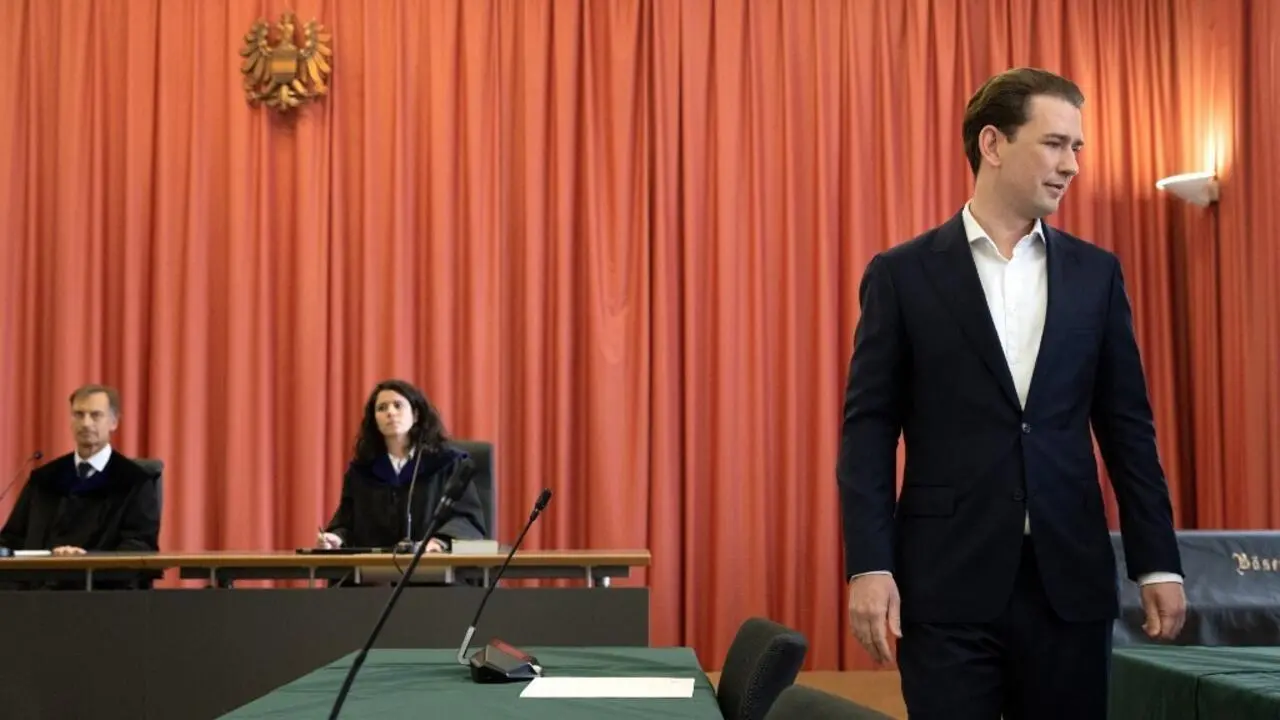
Former Austrian Chancellor Sebastian Kurz, once the prodigy of European conservative politics, has been acquitted on appeal of charges of false testimony before a parliamentary commission. The decision, handed down on Monday, May 26, 2025, by the Vienna Higher Regional Court, overturns his previous conviction from last year, which had sentenced him to an eight-month suspended prison term.
The court found that "the objective element of the offense of false testimony was not fulfilled," as Kurz had "answered the deputies' question correctly and completely." In a statement released after the verdict, the tribunal emphasized that "no important fact was concealed in his response." Kurz, now 38 years old, had been accused of lying under oath about his role in the appointment of a close associate to lead a state-owned company. He consistently denied any wrongdoing.
Speaking to the court on Monday, the former chancellor declared, "I had absolutely no intention of making a false statement." He expressed relief, noting that he had faced years of accusations and was pleased that "everything collapsed on its own." His attorney, Otto Dietrich, argued that the first-instance court had not "properly examined essential elements." The appeal court agreed, leading to the acquittal.
A Political Career Marked by Rapid Rise and Fall
Sebastian Kurz first rose to prominence as a charismatic conservative figure, becoming Austria's youngest ever chancellor at age 31 in 2017. He led the Austrian People's Party (ÖVP) into a coalition with the far-right Freedom Party (FPÖ), a move that drew both praise and criticism. His tenure was marked by strict immigration policies and a firm stance on European Union reforms. However, his government collapsed in 2019 after the so-called "Ibizagate" scandal, where a secretly filmed video on the Spanish island of Ibiza revealed FPÖ leaders discussing possible corruption and vote-buying schemes.
Despite the scandal, Kurz returned to power later that year in a coalition with the Greens, but his second term was plagued by ongoing investigations into alleged misconduct. In October 2021, facing mounting legal pressure and the prospect of a no-confidence vote, Kurz resigned as chancellor. He withdrew from politics entirely, leaving behind a legacy of polarizing yet impactful leadership.
Details of the False Testimony Case
The conviction that was overturned on appeal stemmed from Kurz's testimony in 2021 before a parliamentary investigative committee. The committee was probing allegations of cronyism and corruption within the ÖVP. Kurz had denied having any decision-making role in the appointment of Thomas Schmid, a former Finance Ministry official and close ally, as head of the state-owned holding company ÖBAG. However, text messages and witness statements suggested that Kurz had been actively involved in the selection process.
In the initial trial, the court had found that Kurz had deliberately provided false information and sentenced him to eight months of probation. That verdict marked the first conviction of a former Austrian chancellor in over three decades. Kurz immediately appealed, maintaining that the lower court had misinterpreted the evidence. The Vienna Higher Regional Court now accepted his arguments, stating that the question posed by lawmakers was ambiguous and that Kurz's response was not proven to be false.
Political analyst Thomas Hofer noted that the acquittal gives Kurz "a free hand" for a potential political comeback. "He emerges morally vindicated for the time being," Hofer said. Austrian Chancellor Christian Stocker, a fellow member of the ÖVP, welcomed the decision, saying, "After a very long procedure, it turned out that the allegations were unjustified. I am happy for Sebastian Kurz."
Ongoing Legal Challenges
While this case has been resolved in Kurz's favor, he is not yet free of legal troubles. Another investigation by the Vienna Prosecutor's Office remains active, focusing on allegations that Kurz and his former aides misused public funds to commission manipulated opinion polls and secure favorable media coverage in tabloids. This probe is linked to the broader "Ibizagate" affair, which exposed a web of potential improprieties among Austrian political elites.
Kurz has consistently denied any criminal intent in these matters, arguing that political communication strategies are common practice. However, prosecutors have gathered evidence including chat logs and financial records that they claim show a systematic effort to deceive the public and tilt the media landscape. If convicted, Kurz could face more severe penalties than in the false testimony case. The investigation is expected to continue through 2026.
Beyond Austria, Kurz has remained active in international circles. He has joined the private sector, working with entities close to former U.S. President Donald Trump. In 2023, he co-founded a cybersecurity firm with the former head of the Israeli NSO Group, the controversial maker of the Pegasus spyware. This move drew criticism from human rights groups but highlighted Kurz's continued ambition on the global stage. He occasionally comments on Austrian politics, suggesting he may not have fully severed ties with public life.
Broader Implications for Austrian Politics
The acquittal is a significant event for Austria's political landscape, where trust in institutions has been shaken by a series of scandals in recent years. The ÖVP, under new leadership, has tried to distance itself from Kurz's era, but his shadow still looms. Some party members privately hope that a legal vindication might allow Kurz to make a comeback, potentially as a candidate in the next national elections. Public opinion remains divided; polls show that while Kurz still enjoys support among conservative voters, many Austrians are weary of the recurrent corruption allegations.
The case also highlights the complexities of prosecuting false testimony in parliamentary inquiries. Legal experts point out that the appeals court's decision emphasizes the need for precise and unambiguous questions from committee members. This could affect how future investigations are conducted, potentially making it harder to hold politicians accountable for evasive or misleading answers.
For now, Sebastian Kurz has indicated he will focus on his business ventures and family life. In his brief public remarks after the verdict, he thanked his lawyers and said he hoped to move forward. Whether he will return to politics remains uncertain, but as analyst Thomas Hofer noted, the acquittal "clears the way for any future steps he might want to take."
The entire proceedings have been a stark reminder of how quickly political fortunes can change in Europe's small but influential Alpine republic. From being a symbol of youthful dynamism to facing criminal charges, and now to being fully exonerated on one major count, Kurz's journey reflects the volatility of modern democratic systems. The next chapter in his story may yet be written, but for the moment, the former chancellor can breathe a little easier.
Source: RFI News