

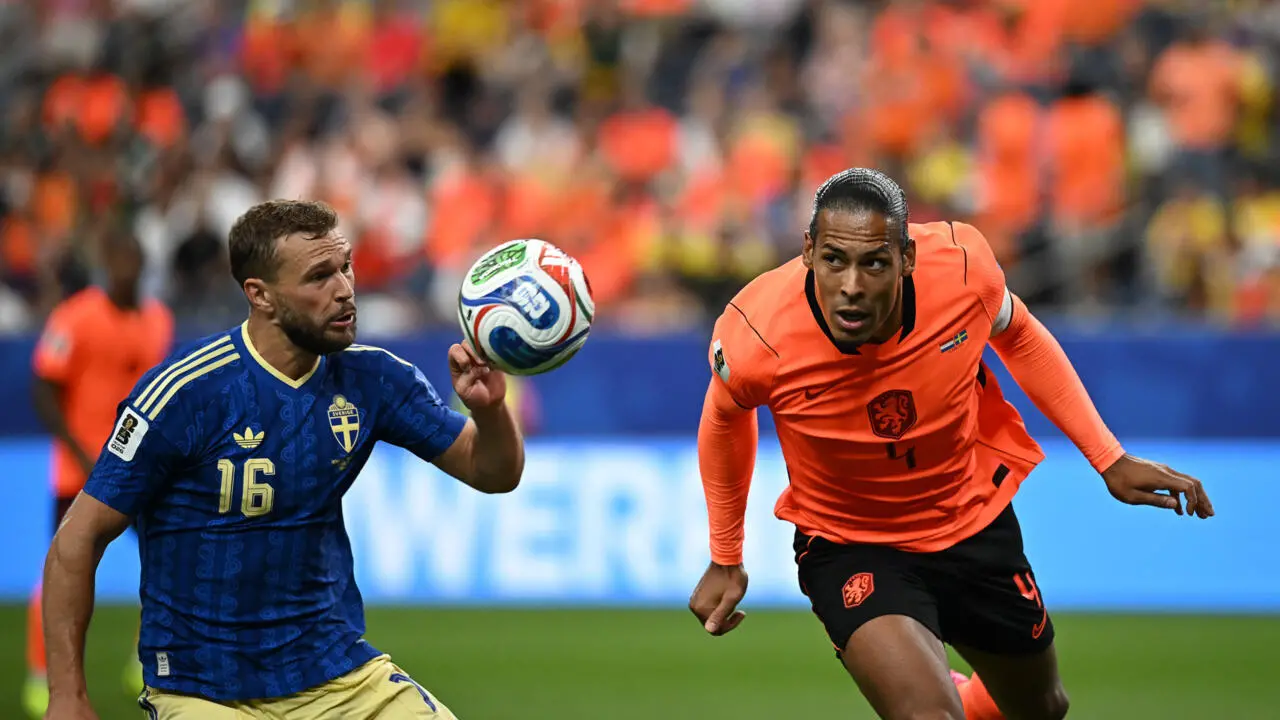
The 2026 FIFA World Cup, set to be hosted by the United States, Canada, and Mexico, will feature an expanded 48-team format for the first time. While this expansion offers more slots for nations across the globe, the qualifying battles in many regions have become even more intense. For Japan, Sweden, and the Netherlands—three traditional footballing powers—the road to the tournament has turned into a genuine photo finish, with every match carrying enormous weight.
Japan: Navigating the Asian Gauntlet
Japan, a perennial Asian powerhouse and four-time Asian Cup champion, has never missed a World Cup since 1998. However, the 2026 qualifying campaign has been unusually challenging. Placed in Group B of the third round of Asian Qualifiers alongside Saudi Arabia, Australia, China, Bahrain, and Indonesia, the Samurai Blue have struggled to find consistent form. As of the latest matchdays, Japan sits in second place behind Saudi Arabia, with both teams tied on points but the Saudis holding a superior goal difference. Australia lurks just one point behind, making the final two matchdays critical.
Under manager Hajime Moriyasu, Japan has relied on a mix of experienced veterans—like captain Wataru Endo (Liverpool) and attacking midfielder Takumi Minamino (Monaco)—and emerging talents such as Takefusa Kubo (Real Sociedad) and Kaoru Mitoma (Brighton & Hove Albion). However, defensive lapses and an inability to break down low-block defenses have cost points. The upcoming away fixture against Saudi Arabia in Jeddah could determine the group winner, with the top two securing automatic qualification. A slip there might force Japan into a fourth-round playoff, where all bets are off.
Historically, Japan has thrived under pressure, advancing to the Round of 16 in 2002, 2010, 2018, and 2022. Their 2022 campaign, where they stunned Germany and Spain before falling to Croatia on penalties, showcased their tactical discipline and resilience. Replicating that form on the road to 2026 is essential.
Sweden: Fighting Through the European Maze
Sweden’s journey to 2026 is similarly fraught. The Blågult have a storied World Cup history, finishing runners-up in 1958 and third in 1994, but they failed to qualify for 2022 after a heartbreaking loss to Poland in the playoffs. In the European qualifiers for 2026, Sweden is drawn in Group F alongside the Netherlands, Austria, Hungary, and others. The group is incredibly tight: the Netherlands leads by two points, with Sweden and Austria tied in second. With only the group winner guaranteed a spot (the runner-up enters a complex playoff), every match is decisive.
Manager Jon Dahl Tomasson has injected a fresh attacking philosophy, centering on striker Alexander Isak (Newcastle United) and winger Dejan Kulusevski (Tottenham Hotspur). The midfield, anchored by the experienced Kristoffer Olsson and rising star Hugo Larsson, provides creativity and energy. Yet, defensive injuries have been problematic, with key center-back Victor Lindelöf missing several games. Sweden’s 2-0 loss to the Netherlands in October 2025 was a major setback, but a narrow win over Austria kept them alive. The return leg against the Dutch in Stockholm will likely decide the group—a classic Nordic showdown under the lights.
Sweden’s qualifying history is marked by dramatic finishes, including their 2018 playoff win over Italy. They have the pedigree to rise to the occasion, but consistency remains an issue.
The Netherlands: Oranje’s Quest for Redemption
The Netherlands, three-time World Cup runners-up (1974, 1978, 2010), are no strangers to tight qualification battles. After missing out on the 2018 tournament, they rebounded strongly to reach the quarterfinals in 2022. Under manager Ronald Koeman, the Oranje blend technical brilliance with tactical flexibility. Key players include defender Virgil van Dijk (Liverpool), midfielder Frenkie de Jong (Barcelona), and forward Memphis Depay (Atlético Madrid). The emergence of young stars like Xavi Simons (RB Leipzig) and Jurriën Timber (Arsenal) has deepened the squad.
In Group F, the Netherlands currently holds the top spot, but their lead is precarious. A surprising 1-1 draw with Hungary in Budapest and a narrow 2-1 win over Sweden in Amsterdam highlighted vulnerabilities in transition. The Dutch attack has been potent, but defensive lapses against counter-attacking sides have raised concerns. The final two matches—away to Austria and at home to Sweden—will test their nerve. A loss to Sweden could send them to the playoffs, a perilous path considering Europe’s intense competition for the 16 available slots.
The Netherlands’ style, rooted in Total Football, demands high pressing and positional fluidity. When it clicks, they can dismantle any opponent. But the pressure of expectation, especially after three final defeats, often weighs heavily. Koeman’s experience from 2018-2020 qualifying campaigns will be crucial.
The Photo Finish Dynamic
What unites these three nations is the razor-thin margin for error. Japan faces a final showdown with Saudi Arabia; Sweden and the Netherlands collide in a decisive match. The phrase “photo finish” is apt—a fraction of a second, a single goal, or a controversial referee decision could separate success from failure.
For Japan, a win against Saudi Arabia would secure top spot. A draw might suffice if Australia stumbles, but that’s risky. For Sweden, beating the Netherlands at home would put them level on points and give them head-to-head advantage, setting up a final day scenario against a weaker opponent. The Netherlands, meanwhile, need to avoid defeat and rely on their own results.
Beyond the immediate standings, the expanded World Cup means 16 spots for Europe and 8 for Asia (including a playoff spot). Yet the competition has intensified because more teams from outside the traditional powers have improved—Indonesia’s rise in Asia and Hungary’s resurgence in Europe are just two examples. The margins have shrunk.
Key Players to Watch
For Japan, Takefusa Kubo’s dribbling and creativity could unlock tight defenses. Captain Wataru Endo’s leadership in midfield is invaluable. For Sweden, Alexander Isak’s pace and finishing are world-class—his goal against Austria was a masterpiece. Dejan Kulusevski’s ability to cut inside from the right flank adds a different dimension. For the Netherlands, Virgil van Dijk’s aerial dominance at both ends and Frenkie de Jong’s incisive passing are foundational. Memphis Depay, when fit, remains a consistent scorer.
Injuries could tilt the balance. Japan relies heavily on Kaoru Mitoma’s dribbling, but he has been nursing a knock. Sweden’s Victor Lindelöf’s absence has been felt. The Netherlands have depth, but any loss to van Dijk would be catastrophic.
Historical Context and Legacy
Japan’s World Cup journey began in 1998, and they have steadily improved, learning from European experiences. Sweden’s golden generation of the 1990s set high standards, but recent failures have created a hunger for revival. The Netherlands, despite their three final losses, are revered for their attacking philosophy. Missing another World Cup would be a massive blow for Dutch football, especially after the disappointment of 2018.
The 2026 tournament will be historic as the first hosted by three nations, and the expanded format ensures more diversity. For these three teams, the fight is not just about qualification but about affirming their place among football’s elite. The photo finish is a testament to the sport’s unpredictability—a single moment can define an entire campaign.
As the final qualifying matchdays approach, fans in Tokyo, Stockholm, and Amsterdam are holding their breath. The drama is set to peak, with world-class talent, tactical battles, and raw emotion all converging in a race where every second counts. Whether it’s Japan’s disciplined counter-attacks, Sweden’s explosive transitions, or the Netherlands’ elegant possession, the outcome remains tantalizingly uncertain. One thing is clear: the 2026 World Cup will be richer for having any of these three nations in the draw—but only two might make it. The photo finish has just begun.
Source: France 24 News