

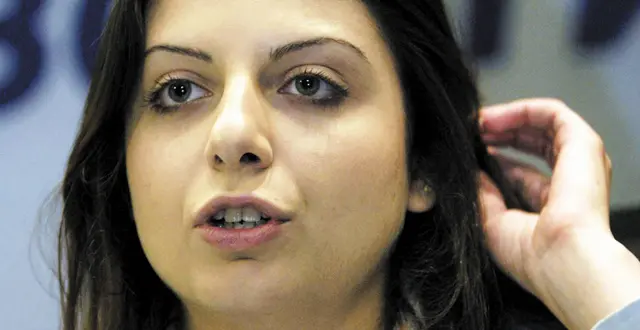
Margarita Simonyan, editor-in-chief of the Kremlin-funded Russian news channel RT, sat down for lunch at her family's restaurant in Sochi, Russia, to discuss the network's role in global media. Known as the first lady of Russian propaganda, Simonyan, 36, pushed back against accusations that RT is an anti-Western propaganda outlet, calling such claims a 'cliché' that makes her smile.
The interview took place at Zharko!, a restaurant run by her family in the suburbs of Sochi. Simonyan, dressed casually in a rugby club T-shirt, greeted the journalist with a beer and a voice recorder. Her mother and aunt sat nearby. Over four hours, the conversation covered RT's history, her personal background, and the network's often-controversial approach to news.
RT, originally Russia Today, was launched in 2005 under the guidance of Mikhail Lesin, a powerful Kremlin media advisor. The idea was to counter what the Kremlin saw as biased coverage of Russia in Western media. Initially, RT focused solely on Russia, but viewership was low. Within a year, Simonyan realized that approach was failing. Watching CNN and ABC, she noticed they all broadcast the same stories. 'That really made me angry,' she said. 'I realized there are many people in the world who think it shouldn't be like that, so it made sense to create something for them.'
RT then shifted to a model that invites a wide range of guests, from left-wing American activists to right-wing European populists and conspiracy theorists. The channel is known for its 'whataboutism'—pointing out Western hypocrisy rather than defending Russia directly. For example, during the 2014 Ukraine crisis, RT aired reports suggesting that evidence of Russian involvement was an anti-Russian conspiracy. US Secretary of State John Kerry called RT a 'propaganda mouthpiece' feeding President Putin's 'fantasies.'
Simonyan sees RT as a necessary corrective. 'We criticize Western politics far less than Western media criticize Russia,' she argued. 'When was the last time you read something positive about Russia anywhere? That's why the cliché that Russia Today is an anti-Western channel makes me smile.' She dismissed the notion that RT only hosts 'fringe' voices, pointing out that Western mainstream media often exclude alternative perspectives. 'I don't see how you have the audacity to think you know more than anyone else about who is marginal and who isn't,' she told the journalist.
The lunch itself reflected Simonyan's personality and background. Valeria, her cousin, served a feast of local and Armenian dishes: steamed vegetables, fried burdock stalks (a local specialty), dolma (stuffed vine leaves), chicken kebabs, Armenian flatbread with vegetables, Georgian khachapuri (cheese bread), rabbit stew, and grilled lamb ribs. Simonyan had opened the restaurant shortly before the 2014 Sochi Winter Olympics, initially as a high-end rotisserie for the Russian elite. After the Olympics, she changed the menu to more affordable local Caucasian dishes. 'We can't close it in the off-season,' she said softly. 'My whole family works here. Should they eat potatoes from autumn to spring?'
Simonyan's personal story is as remarkable as her professional rise. She grew up in Krasnodar, a regional capital, in the chaotic 1990s. Her father repaired refrigerators; her mother was a housewife. The family lived in a building with no heat or running water, and the only toilet was a hole in the ground shared by all tenants. After school, she helped sell odds and ends at an open-air market. 'There were rats this big in the house,' she recalled.
At age 15, she went to the United States for a year as an exchange student, living in Bristol, New Hampshire. The experience was transformative. American schoolwork was so much lighter than in Krasnodar that teachers skipped her two grades. 'In the 1990s, Russian children grew up very fast,' she said. 'All the teachers told me, "You're so mature for your age, we can't believe you're 15."' Her parents hoped she would stay and eventually bring them over, but she refused. 'I was offended. I said no, and I came back.'
That year in America shattered her illusions about the 'American way of life' as portrayed on TV. 'That's probably when I first started thinking about news,' she said. 'How information, media, and movies shape people's opinions. For those reasons, we in Russia thought an entire country was different from what it really is. Basically, I began to understand that we had been lied to.'
Returning to Russia, she studied journalism almost by accident. In 1998, with money tight, she published a poetry book and found a job at a local TV station that paid a fabulous $20 per month. She quickly climbed the ladder. At 19, she went alone to Chechnya to cover the separatist war without army accreditation. By 22, she was a Kremlin correspondent for state television. Three years covering Vladimir Putin and his inner circle gave her the confidence to be appointed editor-in-chief of the nascent Russia Today at just 25.
'I end up bragging all the time,' she laughed. 'Well, you asked me how it happened, and I'm telling you how it happened.'
Simonyan's background as a young, female member of the Armenian minority is rare among Russian dignitaries. She also serves as editor-in-chief of the state news agency Rossiya Segodnya. She has received a medal from Putin for 'objectivity' during the annexation of Crimea in 2014. Despite RT's theoretical independence, she has a direct phone line to the Kremlin on her desk.
The interview also touched on the death of Mikhail Lesin, RT's founder, who died in November 2015 under mysterious circumstances in a Washington hotel room. Lesin had spent his later years in Beverly Hills. 'He played backgammon here with my grandmother, may her soul rest in peace,' Simonyan said. She dismissed conspiracy theories about his death. 'You may not believe me, but I don't like conspiracy theories.' The journalist pointed out that her network often gives airtime to conspiracy theorists, but she countered: 'I have absolutely forbidden everyone to invite people who talk nonsense or promote weird, unhealthy theories on air. But at the same time, if you only give the microphone to people already in the mainstream media, that means we wouldn't understand why we are doing the same thing.'
One of RT's shows, 'The Truth Seekers,' previously suggested that the Boston Marathon bombing was a US government operation and accused the US of funding 'genocide' in Ukraine. The show was eventually taken off air. Simonyan insisted that the host, Daniel Bushell, was British, not Russian, and that no one censored him.
When asked about RT's reach, Simonyan noted that the channel claims 700 million viewers worldwide in English, Spanish, and Arabic across more than 100 countries. In the UK, however, it attracts only 282,000 daily viewers (0.48% of the audience). RT is proud of its YouTube presence, being the first news outlet to exceed one billion views. 'To be fair, we don't have cats and we don't have Beyoncé, but politics and news,' she said.
The meal concluded with tea, cheesecake, apple strudel, and croissants. Simonyan ordered two more beers. She reminisced about loving America until NATO bombed Belgrade in 1999. 'Otherwise, when the USSR collapsed, I was 11, and unlike many people, I don't miss it.' She asked her mother and aunt if they missed the USSR; her mother said no, just her youth; her aunt admitted she missed it.
Late in the conversation, the journalist finally asked about a notorious social media post from 2012 in which Simonyan announced she would boil a beaver's head for dinner. Russian internet users mocked her cruelly. Her partner, filmmaker Tigran Keosayan, answered: 'Tough. Like bear.' Simonyan, who had not eaten it, turned the question into a final 'whataboutism' attack: 'We aren't used to it because it seems wild. You eat lamb. Have you ever seen a live lamb? It's an adorable little thing running around. And you just ate lamb ribs in front of me.'
The lunch ended after three hours, with Simonyan emphasizing her belief in RT's mission. 'I genuinely believe in what I do. I think it's vital, and I thank God for giving me the opportunity to influence something in the world.'
Source: Le nouvel Economiste News