

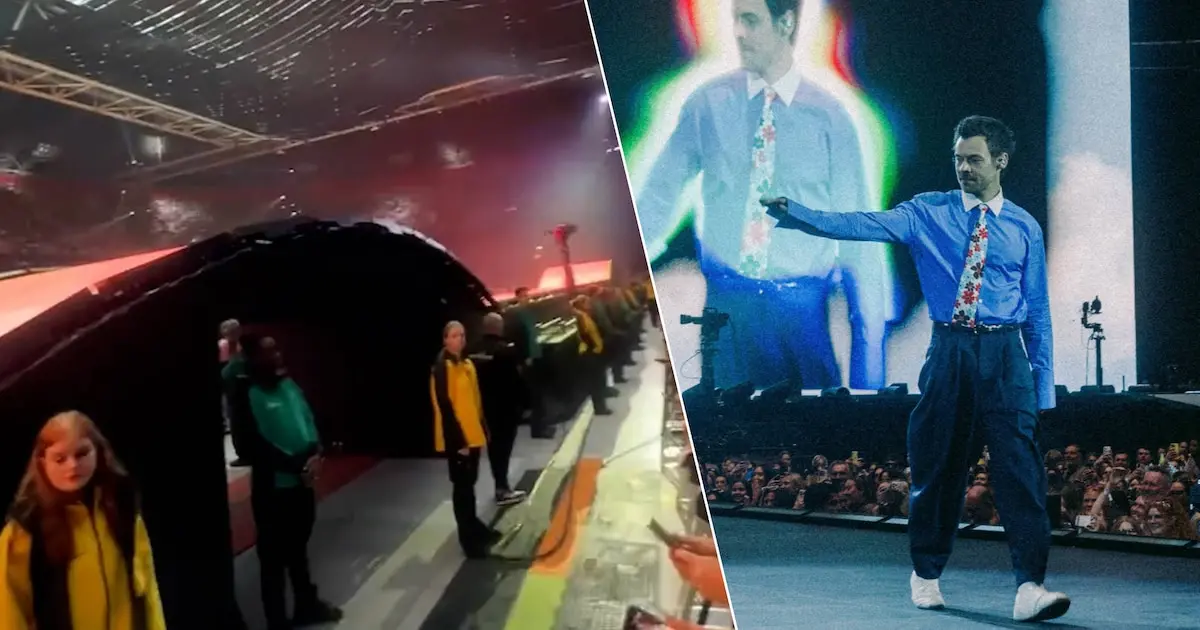
Harry Styles’ production team has announced that they are closely examining, and potentially modifying, the current stage design for his ongoing tour following widespread complaints from fans about poor visibility during the first shows in Amsterdam. The decision comes after numerous spectators at the Johan Cruijff ArenA took to social media to express their frustration, claiming they could barely see the performer during the concert.
The former One Direction star launched the latest leg of his tour last weekend in the Netherlands, with a total of ten performances scheduled in Amsterdam. However, for a significant portion of the audience, the experience fell short of expectations. On platforms like Twitter and Instagram, several fans in the standing pit area reported that they could see almost nothing of the show, primarily due to an unusually high stage elevation and the positioning of catwalks and barriers.
These criticisms quickly reached the singer’s inner circle. In a statement to Variety, a tour spokesperson acknowledged the issue: “It has become apparent that visibility was limited on part of the stage from certain specific areas of the pit.” The statement further confirmed that the team is actively seeking solutions to improve the experience for all attendees. “These zones are being carefully examined and will be adjusted where possible, while respecting safety guidelines.” Sources close to the production team told Variety that concrete changes in the venue are expected within the next few days.
This incident sheds light on the complex challenges of staging large-scale concerts in modern arenas. The Johan Cruijff ArenA is a multi-purpose stadium that hosts both football matches and major music events, and its design can pose unique obstacles for concert organizers. The stage height issue is particularly critical for fans in the front sections, who invest significant money and time to secure the closest possible view of their idol. In this case, many reported that the elevated stage combined with a secondary barrier created a blind spot that obscured the performance for those in the first few rows.
Harry Styles, who rose to fame as a member of One Direction before launching a highly successful solo career, has built a reputation for immersive and fan-centric live shows. His previous tours were praised for their intimate yet spectacular production values, making these complaints all the more surprising to his dedicated fanbase, known as Harries. The current tour, which continues his Love On Tour series, was expected to be a celebration of his third album, Harry’s House, and its GRAMMY-winning hits like “As It Was” and “Late Night Talking.”
The production team’s willingness to adapt and make changes in real time reflects the evolving nature of live entertainment. In recent years, many artists have faced similar issues with venue sightlines, particularly in non-traditional concert spaces. For instance, Taylor Swift’s Eras Tour saw adjustments to stage screens and platform heights in certain arenas to improve visibility. Similarly, BTS and Beyoncé have reconfigured stage elements mid-tour based on fan feedback. The music industry increasingly recognizes that a poor view can significantly detract from the live experience, driving artists and promoters to prioritize sightline optimization alongside elaborate staging.
Beyond the immediate logistical fixes, this controversy has sparked broader discussions about ticket pricing and value. Some attendees paid over €350 for pit tickets, expecting unobstructed views, only to be disappointed by the stage design. The tour's pricing strategy has already faced scrutiny, with many fans questioning whether the high cost of premium tickets is justified when visibility is compromised. This has led to calls for greater transparency from promoters regarding potential sightline issues before tickets go on sale.
As the tour progresses, all eyes will be on how the production team implements the promised adjustments. If successful, this could set a new standard for responsiveness in live events. Harry Styles and his team have long prided themselves on creating inclusive and memorable experiences, and swiftly addressing these complaints will be crucial to maintaining that reputation. For now, fans in Amsterdam and beyond are hoping that the next shows will offer a view worthy of the price they paid and the love they have for the artist.
In addition to the stage design issues, the tour has also been noted for its impressive scale. The Love On Tour production includes a massive circular stage, a long catwalk extending into the audience, and a B-stage for more intimate performances. The aesthetic draws heavily from the retro-futuristic themes of Harry’s House, with vibrant colors, mirrored surfaces, and playful visual effects. However, the very features that make the show visually striking from a distance have, in this case, created obstacles for those closest to the action.
Harry Styles’ career trajectory has been nothing short of remarkable. After One Direction went on indefinite hiatus in 2016, he quickly established himself as a solo artist with a distinct sound and style. His self-titled debut album in 2017 blended folk-rock and pop, while Fine Line (2019) solidified his status as a global superstar. Harry’s House (2022) won Album of the Year at the GRAMMYs and broke streaming records. His concerts are known for their joyous, inclusive atmosphere, often featuring LGBTQ+ pride flags, elaborate costumes, and heartfelt interactions with the crowd. This positive relationship with fans makes the current complaints all the more impactful, as loyal supporters feel their concerns are being heard and addressed.
The timing of the stage review also coincides with other notable events in the music world. As the article notes, there are various other headlines about Eurovision, Patrick Bruel, Britney Spears, and Eric Clapton. Yet the Harry Styles situation stands out because it touches on a fundamental expectation for any live performance: the ability to see the performer. While sound quality and atmosphere are vital, visual access remains a primary reason fans attend concerts, particularly for pop stars who rely on elaborate choreography and staging.
Moving forward, the production team’s approach could influence how other artists design their stages. One possible solution involves lowering the stage platform or repositioning the catwalks to create sightlines from more angles. Another option is to install additional screens or raise existing ones to ensure all areas of the pit have a clear view. Safety regulations must also be considered; barriers are required to protect both fans and artists, but their height and placement can inadvertently block views. Finding the balance between safety and visibility will be key.
In conclusion, while this article deliberately avoids a concluding section, it is clear that the situation remains fluid. Fans are watching closely to see if the adjustments deliver on the promise of an improved experience. If the changes are successful, it could reinforce Harry Styles’ commitment to his audience and set a positive example for the live music industry.
Source: 7sur7.be News