

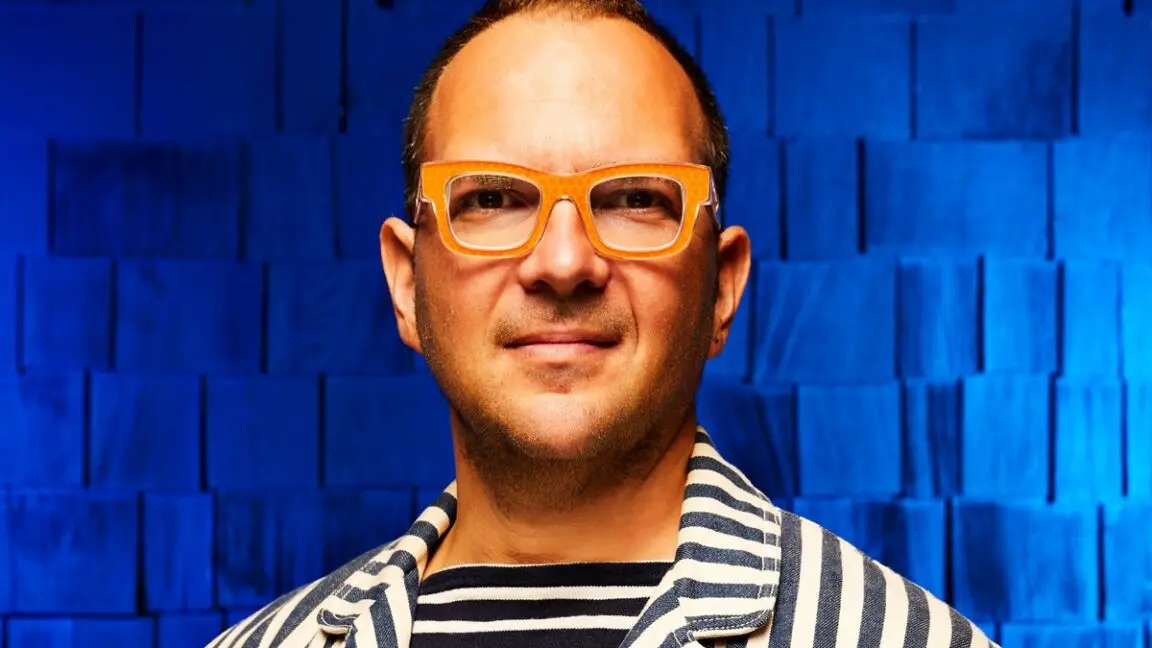
Tech journalist and science fiction author Cory Doctorow is back with a provocative new book that serves as a follow-up to his earlier work on enshittification. Titled 'The Reverse Centaur’s Guide to Life After AI', the book focuses on artificial intelligence and the massive hype surrounding it. Doctorow doesn’t enjoy talking about AI, but he wrote the book to sort out the bullshit from the material reality. He argues that the AI industry is fueled by a bubble that is bigger than any previous tech bubble, and that its collapse could be catastrophic.
What is a Reverse Centaur?
In automation theory, a 'centaur' describes a human augmented with technology, like using autocomplete or driving a car. A reverse centaur, however, is a machine head on a human body—a person serving as a squishy meat appendage for an uncaring machine. Doctorow gives the example of an Amazon delivery driver surrounded by AI cameras monitoring their driving, essentially becoming a peripheral to the delivery van. While being a centaur is generally positive, the AI industry seems intent on creating more reverse centaurs. It’s one thing to help radiologists process X-ray images; it’s another to fire most radiologists and let AI make diagnoses, with the remaining human solely responsible for checking the AI’s work and taking the blame for errors.
The Scale of the AI Bubble
Doctorow points out that capital expenditure on AI globally has reached $1.4 trillion, an enormous bet. Meta wasted $60 billion on the metaverse and spent $150 billion on AI in the last three years. This is much bigger than the dot-com bubble. The material basis for this is a narrative that allows companies to maintain growth stock valuations even after saturating their markets. The ideological basis is a fantasy of a world without people—a world where corporate leaders don’t have to confront workers who know more than they do. AI is the most money-losing thing humanity has ever done, with every customer and every use losing money for the company, and each generation of AI losing more than the last.
Why Workers Hate AI While Bosses Love It
Doctorow highlights a crucial difference from earlier tech booms. In the late 1990s, workers smuggled the web into workplaces and bosses worried about how to cope. Today, the narrative is reversed: workers resist using AI, and firms spy on employees to enforce its use. The paradox is that some workers benefit from AI and become centaurs, while others become reverse centaurs. The key difference is who decides how the technology is used. A centaur decides; a reverse centaur is forced to produce more at the expense of quality and well-being, becoming what Dan Davies calls an 'accountability sink'—taking the blame when AI fails.
Not Anti-AI, but Anti-Hype
Doctorow insists he is not fundamentally anti-AI. He uses AI tools like Whisper for transcription and local models for spell-checking. He warns against the argument that AI is exceptionally evil because it was built by bad people. He defends web scraping, noting that it was used to preserve content that companies like Disney deleted. He argues that making scraping illegal would be catastrophic. Instead of new copyright laws, Doctorow advocates for new labor laws. The only workers who have successfully beaten AI are Hollywood screenwriters and actors, thanks to sectoral bargaining exemptions. Extending such bargaining to all workers would benefit everyone.
The Coming Collapse and Its Residue
When the AI bubble bursts, it could be catastrophic economically. Seven AI companies account for more than a third of the stock market, and they pass around a $100 billion IOU. However, Doctorow sees a difference between unproductive bubbles (like cryptocurrency) and those with productive residues. The dot-com bubble left behind a generation of programmers, cheap hardware, and a vibrant web. After the AI collapse, he predicts cheap GPUs, unemployed applied statisticians, and open-source models that can run on commodity hardware. DeepSeek, a spin-out from a Chinese hedge fund, achieved a $600 billion market sell-off in 24 hours by optimizing open-source models on cheap hardware. This shows the potential for a productive residue.
AI Is Not Coming for Your Job (Yet)
Doctorow distinguishes between AI actually doing a job and a boss being fooled into firing humans and replacing them with inadequate AI. There is infinite evidence of the second, but little of the first. Many AI demos have turned out to be humans pretending to be robots. The most egregious example was Amazon Go stores, which claimed to use AI to track purchases but actually relied on workers in India watching camera feeds. Doctorow challenges tech CEOs: would they trust an AI to care for them in old age? He bets they would choose human care.
Unexpected Bills and Customer Backlash
Companies that invested in AI are now facing higher bills as AI companies cut subsidies before IPOs. Uber’s CTO questioned why they used AI at all once prices rose. This shows how insulated the AI industry is from real business fundamentals. The sector has yet to prove it can generate more revenue than it spends.
Genuinely Useful AI Applications
Despite the hype, Doctorow acknowledges genuinely useful applications. He uses Whisper to transcribe audio for searching, and a chatbot to catch typos in his blog posts. His friend Patrick Ball at the Human Rights Data Analysis Group uses AI to analyze arrest reports and prioritize cases for the Innocence Project, helping to exonerate wrongfully convicted people. These applications are not flashy or expensive; they run locally and don’t require massive data centers. They show that AI can be valuable when used as a tool, not as a replacement for human judgment.
Doctorow’s message is clear: the AI bubble is unsustainable, but the technology itself is not inherently evil. The real danger is the hype that drives massive capital expenditure and the corporate fantasy of a world without people. The solution lies not in copyright reform but in labor law reform that empowers workers to decide how technology is used. When the bubble bursts, we may be left with the tools and talent to build something better.
Source: Ars Technica News