

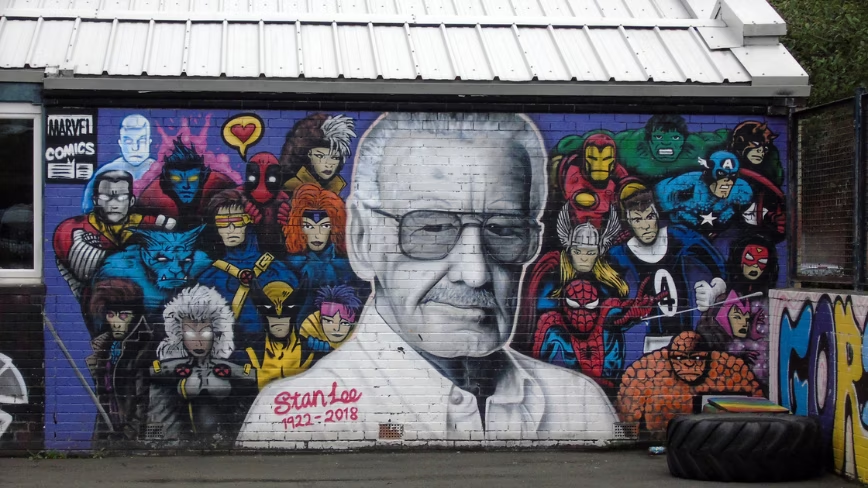
ElevenLabs has struck a deal with Stan Lee Universe to bring the late Marvel co-creator’s AI-generated voice and likeness to its platform, marking the latest instance of a deceased cultural icon being digitally resurrected by artificial intelligence. The partnership puts Lee’s voice on the ElevenLabs Iconic Marketplace for commercial licensing, allows fans to have him narrate any book on the Eleven Reader app, and adds his likeness to Creative Templates for generating images and videos. Two Stan Lee-inspired music filters are also being released on ElevenCreative Music.
The voice was crafted from professional recordings of Lee, who died on 12 November 2018 at the age of 95. Stan Lee Universe is the joint venture between Genius Brands International and POW! Entertainment that controls Lee’s name, voice, likeness, and post-Marvel intellectual property. This venture has been active in licensing Lee’s legacy since its formation in 2020, notably signing a 20-year deal with Marvel Studios in May 2022 for exclusive rights to use Lee’s name, voice, likeness, and signature in future films, television productions, and Disney theme parks worldwide. The ElevenLabs deal extends that licensing strategy into AI-generated content, a category that did not meaningfully exist when the Marvel deal was signed.
The Stan Lee Book of the Month Club
The centerpiece of the deal is the Stan Lee Book of the Month Club, launching inside the Eleven Reader app. Each month, ElevenLabs will release a public domain classic narrated in Lee’s AI-generated voice, starting with Robert Louis Stevenson’s Treasure Island in June. The company says it will add one title per month for the next 12 months. The choice of public domain works is practical: it avoids the licensing complexity of narrating copyrighted books in a synthetic voice while giving ElevenLabs a recurring content programme tied to a recognisable name. Users can also select Lee’s voice to narrate any book in the Eleven Reader library, extending the partnership beyond the curated monthly picks.
This move taps into the growing trend of AI-narrated audiobooks and reading experiences. Eleven Reader already offers a wide range of synthetic voices for text-to-speech, but adding a beloved figure like Stan Lee enhances the emotional connection for fans. The book club not only provides a steady stream of content but also serves as a showcase for the fidelity of ElevenLabs’ voice cloning technology. Each monthly release will be carefully reviewed by the Stan Lee Universe team to ensure it aligns with Lee’s legacy and public image.
AI Cameos: A New Kind of Digital Appearance
Lee’s likeness is coming to ElevenLabs Creative Templates, the company’s visual content generator. Users will be able to create images and videos featuring Lee in the spirit of the on-screen cameos that became his signature across decades of Marvel films. All personal use is non-commercial and governed by safety guidelines approved by both parties. Licensed commercial use of Lee’s likeness is available through the Stan Lee Universe team. Two music Finetunes—Superhero Swells and Retro Hero Fanfare—round out the offering. These are music filters on ElevenCreative Music designed to evoke the aesthetic of Lee’s universe. They are available to all ElevenLabs users with no additional licensing required.
The cameo feature marks a significant expansion of ElevenLabs’ capabilities beyond voice alone. By adding visual generation, the company positions itself as a full-service AI platform for recreating not just voices but entire personas. The templates allow for personalization, meaning fans can insert Lee into their own creative projects, from birthday greetings to fan films, subject to the non-commercial restriction. For brands and content creators, commercial licensing opens the door to advertising, entertainment, and promotional materials that authentically feature Lee’s likeness—a prospect that was previously impossible without extensive post-production or deepfake technology.
The Consent-Based Licensing Model
The deal follows the consent-based licensing framework that ElevenLabs built when it launched its Iconic Marketplace in November 2025. The marketplace connects brands with rights holders for verified celebrity voices, including Michael Caine, Matthew McConaughey, Judy Garland, Burt Reynolds, John Wayne, and Liza Minnelli. ElevenLabs acts as an intermediary, handling licensing agreements and voice synthesis while ensuring that estates and rights holders retain control over how the voices are used. This framework matters because the alternative is already here: AI-generated songs have appeared on deceased artists’ streaming pages without estate or label approval, and unauthorised voice clones of public figures circulate freely on the internet. ElevenLabs is positioning its marketplace as the legitimate alternative—a model where the rights holders initiate and control the licensing rather than discovering their assets have been cloned without permission.
Chaz Rainey of Stan Lee Universe framed the partnership as a continuation of how Lee engaged with fans throughout his career. Lee was famous for meeting audiences wherever they were, whether in comic book pages, at conventions, or in his trademark movie cameos. The AI voice and likeness tools are pitched as the next iteration of that tradition. Rainey emphasized that every use must go through approval processes to ensure it respects Lee’s spirit and does not misrepresent him. The governance includes guidelines on what the AI can say and in what context, aiming to prevent the kind of misuse that has plagued other AI-generated content.
The Business of Digital Afterlives
ElevenLabs raised $500 million in a Series D round in February 2026, led by Sequoia Capital, valuing the company at $11 billion. That was more than triple its previous valuation from a $6.6 billion employee tender offer in September 2025. The company closed 2025 at $330 million in annual recurring revenue and has raised $811 million in total funding. The Stan Lee partnership is the latest in a series of high-profile deals that position ElevenLabs as the dominant platform for AI-powered digital afterlives. The Iconic Marketplace already hosts voices ranging from living celebrities like McConaughey and Caine to historical figures including Maya Angelou, Alan Turing, and Mark Twain. The company’s roster spans actors, athletes, scientists, and cultural icons, each carefully licensed and synthesized from authorized source material.
The financial trajectory reflects the immense investor appetite for generative AI applications, particularly those with clear monetization paths. ElevenLabs charges licensing fees for commercial use of its Iconic voices and subscription tiers for individual and business users. The Stan Lee deal is expected to drive significant engagement on the Eleven Reader app and attract new users who are fans of the Marvel universe. Moreover, the music filters offer a cross-promotional opportunity, tying the brand into the booming AI music generation space. The $11 billion valuation underscores confidence that consent-based, high-quality AI voice and likeness cloning will become a standard tool in media and advertising.
For Stan Lee Universe, the partnership provides a new revenue stream and a way to keep Lee’s presence alive in popular culture. Given that Lee passed away in 2018, his last on-screen cameo (in Avengers: Endgame) was released posthumously. The AI cameos allow his spirit to continue appearing in new contexts, which resonates with fans who grew up watching his brief appearances in Marvel films. The book club similarly extends his legacy as a storyteller, even if the words are not his own. The deal is structured so that Stan Lee Universe retains control, and all proceeds are managed according to the terms of Lee’s estate.
Ethical Considerations: The Uncomfortable Question
The partnership will inevitably invite scrutiny. The ethics of AI-generated content remain contested, and putting a dead man’s voice and face into new creative contexts—no matter how carefully licensed—raises questions that consent frameworks alone cannot fully answer. Lee cannot approve what his AI likeness says or does. The rights holders can, and in this case they have, but the distance between estate approval and personal consent is a gap the industry has not resolved. Critics argue that digital resurrection commodifies a person’s identity in ways that they might not have endorsed while alive. Others worry about the potential for abuse: even with safeguards, an AI voice could be taken out of context or used in offensive ways that tarnish a legacy.
ElevenLabs has attempted to address these concerns by implementing watermarking and usage tracking for all voice clones on its marketplace. The company also requires commercial licensees to agree to strict terms of use that prohibit hate speech, defamation, or misrepresentation. For the Stan Lee partnership specifically, both parties formed a joint ethics committee to review all major uses before launch. However, the fact remains that the technology is still new, and precedent is being set in real time. Other companies have faced backlash for similar initiatives, such as the use of a deceased actor’s likeness in The Mandalorian and the unauthorised deepfakes of celebrities on social media.
Proponents argue that the consent-based model honors the wishes of the deceased’s representatives and provides a structured way to manage digital legacies. They point to the alternative—unregulated, unauthorized clones—as far worse, because it denies families and estates any control or compensation. The Stan Lee Universe team has stated that they are deeply committed to preserving Lee’s values and that any AI generated content will be vetted for quality and appropriateness. They also note that Lee himself was a proponent of new technology and often embraced innovation, from the first Marvel comic books to the creation of the Marvel Cinematic Universe. In that sense, the AI tool might be seen as a natural extension of his forward-thinking approach.
What ElevenLabs and Stan Lee Universe have built is the most commercially structured version of digital resurrection yet attempted for a pop culture figure of this stature. Whether that structure is sufficient to honor the legacy it claims to protect is a question that will follow every AI-generated cameo, every synthetic narration, and every licensed use of a voice whose owner is no longer here to hear it. The industry is watching closely, and the outcome of this partnership could influence how other estates—and the public—view the ethics of AI-powered afterlives for years to come.
Source: TNW | Apps News