

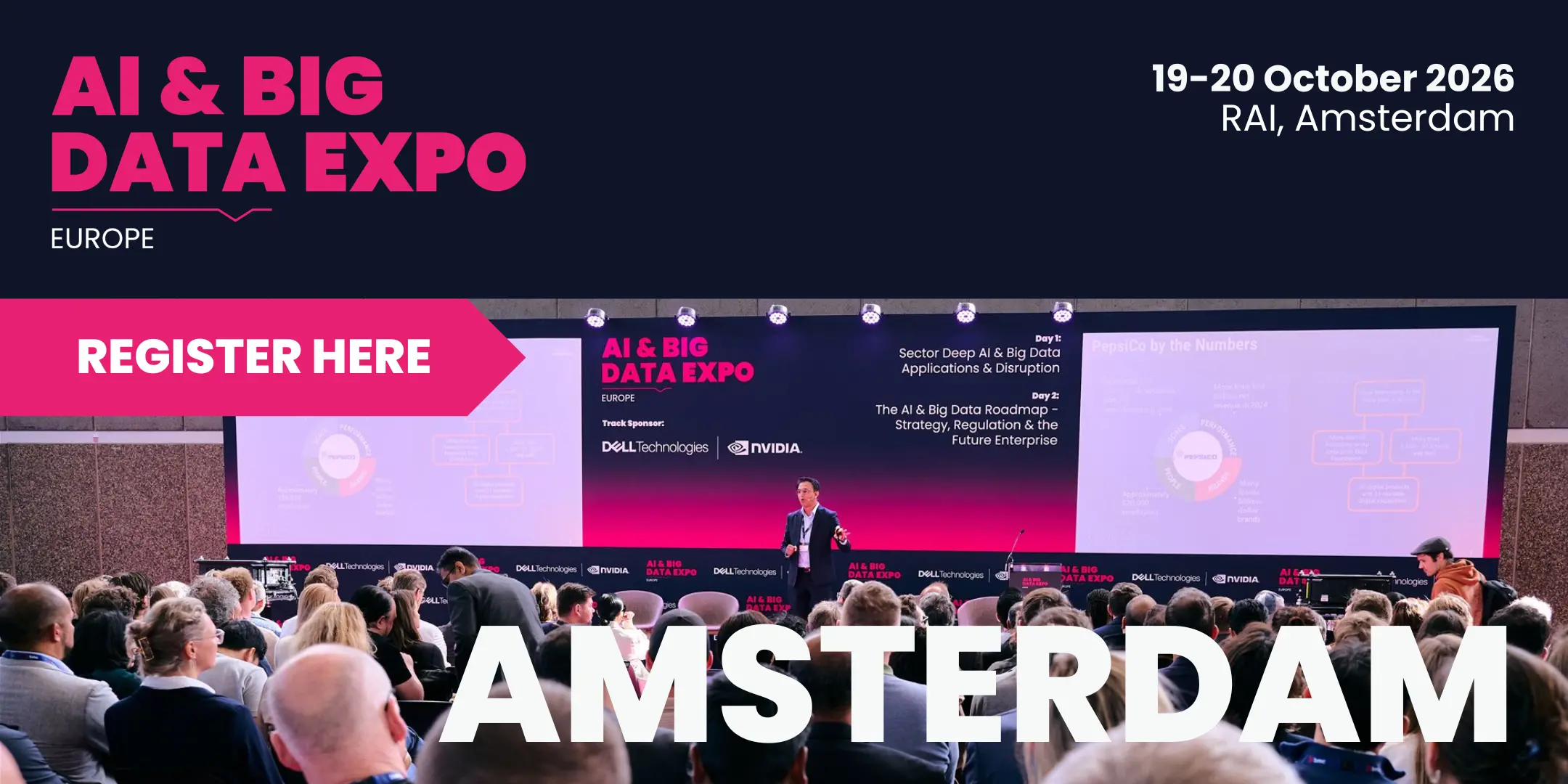
The AI & Big Data Expo Europe 2026, held in Amsterdam, marked a pivotal moment for the technology community. Over three days, thousands of attendees, including CTOs, data scientists, and policymakers, gathered to explore the latest innovations and challenges in artificial intelligence and big data. The event featured more than 200 speakers, 150 exhibitors, and a series of keynote sessions that set the agenda for the coming years.
Headline: AI Ethics Takes Center Stage
One of the most talked-about topics was the ethical deployment of AI systems. A panel led by European Commission officials and ethicists outlined new proposed regulations that would require companies to prove their algorithms are free from bias before deployment. This follows a series of high-profile incidents where AI-powered hiring tools discriminated against certain demographics. The expo also saw the launch of the "Ethical AI Certification Program," an industry-led initiative that aims to standardize ethical audits across Europe.
Key Fact: The Program covers 14 core criteria, including transparency, accountability, and fairness. It will be voluntary for the first two years, but participants expect it to become mandatory later.
Data Sovereignty and the Rise of Federated Learning
With the European Data Act now fully in effect, companies are scrambling to comply with stringent data localization requirements. A major keynote from a leading cloud provider revealed that federated learning—a technique that trains AI models across decentralized data without moving the data—has seen a 400% adoption increase among European enterprises since 2024. This approach allows firms to leverage sensitive data while respecting privacy laws.
The expo also featured a live demonstration of a healthcare application using federated learning to detect early signs of Alzheimer's disease. The model was trained on data from 12 hospitals across six countries, without any patient information leaving the hospital's servers. The results showed a 95% accuracy rate, matching models trained on centralized datasets.
Key Fact: The healthcare demo used NVIDIA's Clara Federated Learning SDK and achieved 95% accuracy on a dataset of 500,000 brain scans.
Quantum AI: From Theory to Practice
Another breakthrough highlighted at the expo was the integration of quantum computing with AI algorithms. A startup from Munich presented a quantum-enhanced machine learning model that can analyze financial risk portfolios in seconds, a task that currently takes classical supercomputers several days. The technology is still in its infancy, but the company demonstrated a proof-of-concept with a major German bank.
Industry analysts at the event noted that while fully fault-tolerant quantum computers are still a decade away, near-term quantum devices—so-called Noisy Intermediate-Scale Quantum (NISQ) devices—can already outperform classical computers for specific optimization problems. The expo's dedicated quantum zone featured hands-on workshops where attendees could write and test quantum circuits using IBM Qiskit and Google Cirq.
Key Fact: The quantum financial model reduced risk analysis time from 72 hours to 12 seconds in the demo, using a 127-qubit IBM Eagle processor.
Workforce Transformation and Reskilling
A consistent theme across multiple sessions was the impact of AI and big data on the workforce. According to a report released at the expo by the European Centre for the Development of Vocational Training (CEDEFOP), 35% of EU jobs will be significantly transformed by AI by 2030, but only 15% of workers have received any form of digital retraining. The expo launched the "AI Reskilling Alliance," a partnership between 50 tech companies and educational institutions to provide free online courses in data literacy, machine learning, and AI ethics.
Workshops at the expo taught practical skills such as building no-code AI chatbots using platforms like Dataiku and making sense of big data with Apache Spark. There was also a strong emphasis on soft skills—experts argued that as AI takes over routine tasks, skills like critical thinking, creativity, and emotional intelligence will become more valuable.
Key Fact: The AI Reskilling Alliance aims to train one million European workers by 2028. The first cohort of 50,000 courses opened for enrollment during the expo and filled within 24 hours.
Edge AI and Real-Time Analytics
Another major announcement was the release of a new open-source framework for deploying AI models on edge devices. Developed by a consortium of universities and IoT companies, the framework reduces model size by up to 80% without significant loss of accuracy, making it feasible to run advanced computer vision on devices like surveillance cameras, drones, and industrial sensors. This has immediate applications in manufacturing, where real-time defect detection can save millions in waste.
A live demo showed a smart factory setup where edge AI sensors detected a microscopic crack on a turbine blade in 0.2 seconds—faster than any human inspector. The data was then aggregated in a central digital twin to predict future failures across the entire production line.
Key Fact: The edge framework, called TinyEdge, supports popular models like YOLOv8 and ResNet50, and can run on devices as small as a Raspberry Pi 4.
AI for Climate Action and Sustainability
Several sessions focused on using AI and big data to combat climate change. One notable case study came from a Dutch startup that uses satellite imagery and machine learning to detect methane leaks from oil and gas infrastructure. Their algorithm can pinpoint leaks with 98% accuracy, helping companies plug them before the gas—which is 80 times more potent than CO2—escapes into the atmosphere. The startup has already been used by Shell and TotalEnergies to reduce their methane footprint by 30% since 2024.
Another presentation showed how AI is being used to optimize renewable energy grids. A collaboration between Google DeepMind and a Scandinavian utility company demonstrated a deep learning model that predicts wind energy generation 72 hours in advance with 90% accuracy, allowing grid operators to balance supply and demand more efficiently. This has reduced the need for fossil-fuel backup plants by 25% in the trial regions.
Key Fact: The methane detection model processes 10 TB of satellite data daily and has been shared as an open-source tool on GitHub. Over 200 energy companies have accessed it since the expo.
The Showcase of Startups
The expo's startup zone featured 30 emerging companies, each pitching innovative applications of AI and big data. Among the winners of the "Best AI Innovation Award" was a startup from Barcelona that uses generative AI to automatically create synthetic data for training machine learning models, addressing the privacy and scarcity issues of real-world data. Another finalist, from Warsaw, developed an AI-driven platform that predicts equipment failures in manufacturing plants, reducing downtime by an average of 40%.
Investors were notably active: according to a report released at the expo by VentureScanner, European AI startups raised €12 billion in Q1 2026 alone, a 45% increase from the same period in 2025. The expo facilitated 2,000+ one-on-one meetings between startups and venture capital firms, with several deals being signed on the spot.
Key Fact: The synthetic data startup, called SynthAI, secured €15 million in Series A funding during the expo. Their solution is already used by three of the top five European banks for fraud detection model training.
Looking Ahead
As the expo drew to a close, organizers announced that the next edition in 2027 will be co-located with the European Robotics Forum, signaling a growing convergence between AI, big data, and robotics. The decision comes as humanoid robots capable of performing complex tasks in warehouses and hospitals are starting to enter commercial use. Experts at the expo predicted that by 2030, every major European city will have at least one fully autonomous delivery service, underpinned by real-time big data analytics and edge AI.
The AI & Big Data Expo Europe 2026 reaffirmed that Europe is not just keeping pace but is increasingly setting the global agenda for responsible and innovative use of artificial intelligence and big data. The conversations and announcements made here will shape the industry for years to come.
Source: AI News News