

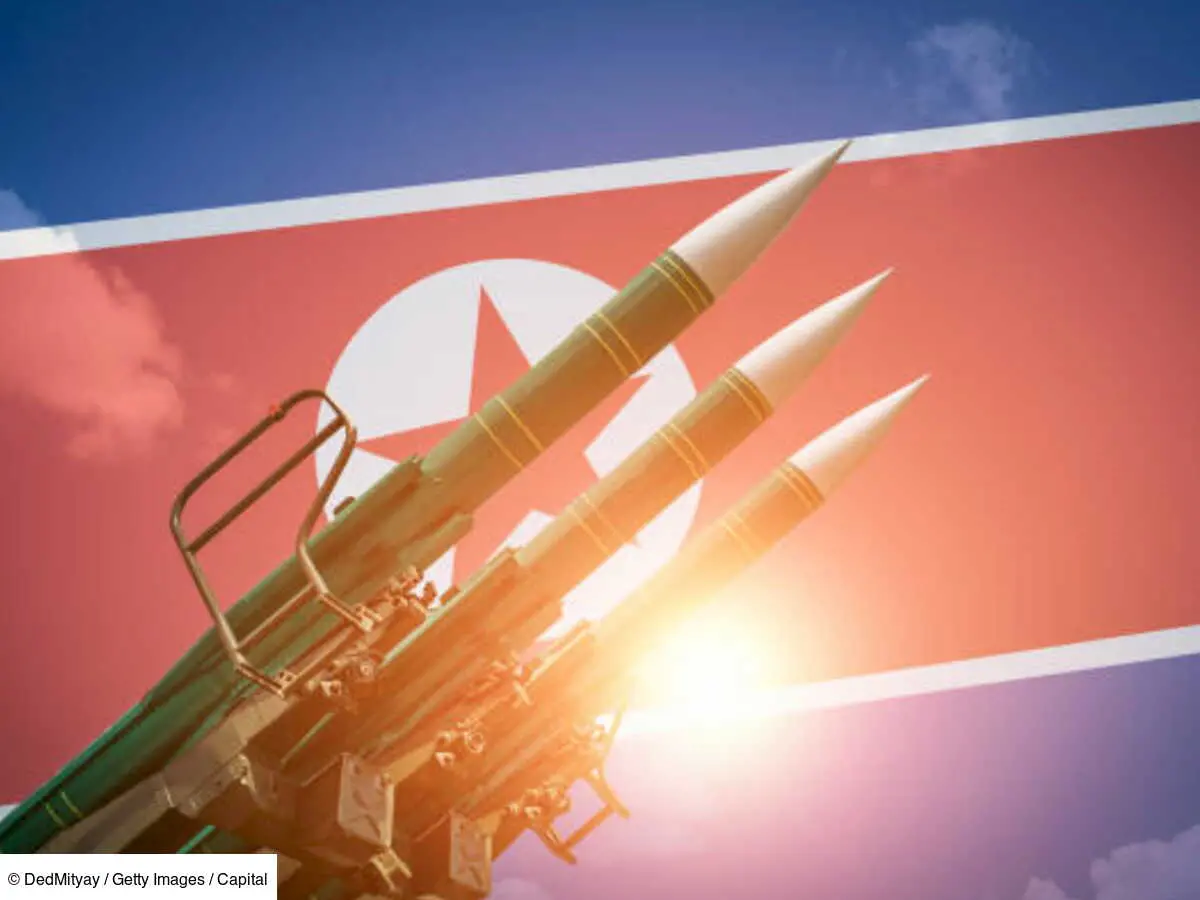
North Korea conducted a successful test of a new light multi-purpose missile system and a tactical cruise missile on May 26, according to reports from Seoul and Pyongyang. The launches, carried out from the city of Chongju, were supervised by North Korean leader Kim Jong Un, who described the weapons as major improvements in the country's military capabilities. The missiles flew approximately 80 kilometers into the Yellow Sea, as confirmed by the South Korean military.
Kim Jong Un was quoted by the official Korean Central News Agency (KCNA) as stating that these new weapon systems are a clear sign of the enhancement of North Korea's military strength and a demonstration of significant technical progress. The tests come at a time when geopolitical tensions are high, with ongoing conflicts in Ukraine and the Middle East providing a backdrop that analysts believe encourages Pyongyang to push forward with its nuclear ambitions.
Context of the Tests
The latest missile tests are part of a broader pattern of North Korean weapons development that has accelerated in recent years. In April, North Korea tested a ballistic missile equipped with a simulated cluster munition warhead, further violating United Nations Security Council resolutions that ban such launches. These tests are viewed by the international community as direct challenges to global non-proliferation norms.
North Korea has long sought to develop a reliable nuclear deterrent capable of reaching the continental United States. Over the past decade, Pyongyang has conducted numerous missile tests, including intercontinental ballistic missiles (ICBMs), intermediate-range missiles, and submarine-launched ballistic missiles (SLBMs). The new light multi-purpose missile system tested on May 26 appears to be a mobile platform designed to launch multiple rockets or tactical missiles, potentially complicating detection and interception efforts.
Kim Jong Un's Strategic Goals
Kim Jong Un has repeatedly emphasized the need to modernize North Korea's armed forces, particularly its nuclear and missile capabilities. In speeches before the Workers' Party of Korea, he has stated that a strong military is essential for national security and for countering what he terms U.S. hostility. The recent tests align with his stated goal of achieving a balance of power with the United States and its allies.
Analysts suggest that North Korea is exploiting the current global turmoil to strengthen its position. The wars in Ukraine and the Middle East have diverted attention and resources from major powers, weakening the enforcement of international sanctions. Pyongyang has also deepened its cooperation with Russia, which has been isolated by Western sanctions, and maintains close ties with China, its primary economic and political ally.
Role of China and Russia
The timing of the missile tests is particularly noteworthy given the rumors of a potential visit by Chinese President Xi Jinping to North Korea. South Korean news agency Yonhap reported that Xi may travel to Pyongyang in the coming week, though neither China nor North Korea has confirmed or denied the speculation. If true, such a visit would be Xi's first to North Korea since 2019 and would signal continued Chinese support for Kim's regime despite international pressure.
China has consistently opposed U.N. sanctions against North Korea and has called for a peaceful resolution to the Korean Peninsula issue. Beijing views Pyongyang as a strategic buffer against U.S. influence in the region. At the same time, Russia has emerged as a key partner for North Korea, particularly in the areas of military technology and energy. Moscow's invasion of Ukraine has created opportunities for Pyongyang to export weapons and receive technical assistance in return.
Technical Details of the Tested Systems
The light multi-purpose missile system tested on May 26 is believed to be a mobile launcher capable of firing multiple types of missiles, including short-range ballistic missiles and cruise missiles. Such systems are designed for rapid deployment and can be hidden in caves or tunnels, making them difficult to target preemptively. The tactical cruise missile tested alongside it is part of a newer generation of North Korean precision-strike weapons that can evade air defenses by flying at low altitudes.
According to South Korean military officials, the missiles flew about 80 kilometers, which is relatively short range for North Korean systems. However, analysts note that the purpose of the test was likely to verify the system's reliability and accuracy rather than to demonstrate range. The successful test suggests that North Korea is making steady progress in miniaturizing components and integrating advanced guidance systems.
International Reactions and Sanctions
The United Nations Security Council has imposed multiple rounds of sanctions on North Korea since its first nuclear test in 2006. These sanctions ban the country from conducting ballistic missile tests and nuclear activities. However, enforcement has been uneven, and Pyongyang has continued to develop its weapons programs with impunity. The recent tests have drawn condemnation from the United States, South Korea, and Japan, but no new punitive measures have been announced.
South Korea's National Security Council held an emergency meeting after the launches and expressed regret over North Korea's continued provocations. The South Korean military has maintained a high alert posture and is sharing intelligence with U.S. and Japanese forces. Japan also lodged a protest through diplomatic channels, calling the tests a violation of U.N. resolutions.
Historical Context of North Korean Missile Development
North Korea's missile program began in the 1970s with the acquisition of Soviet Scud technology. Over the decades, it has developed an indigenous arsenal that includes short-range, medium-range, and intercontinental ballistic missiles. The country has also tested multiple warhead buses and hypersonic glide vehicles, indicating advanced re-entry technology. The latest light multi-purpose system is seen as a logical progression, enabling battlefield flexibility.
In 2018, North Korea engaged in a brief period of diplomacy with the United States and South Korea, even agreeing to a moratorium on long-range missile tests. However, that moratorium collapsed in 2022 when Kim Jong Un announced that North Korea would no longer be bound by the self-imposed restrictions. Since then, the pace of testing has accelerated dramatically, with North Korea launching more missiles in 2023 and 2024 than in any previous years.
Implications for Regional Security
The continued missile tests by North Korea pose a direct threat to the security of South Korea and Japan, which are within range of most of Pyongyang's weapons. South Korea's capital, Seoul, with a population of nearly 10 million, is only about 50 kilometers from the border and vulnerable to artillery and rocket attacks. Japan, which hosts U.S. military bases, is a target for North Korean medium-range missiles.
The tests also complicate efforts to denuclearize the Korean Peninsula. The United States has repeatedly called for dialogue, but North Korea has rejected talks unless the U.S. abandons its hostile policies. Meanwhile, the U.S. maintains joint military exercises with South Korea, which Pyongyang denounces as rehearsals for an invasion.
In response to North Korean provocations, the United States has deployed strategic assets such as aircraft carriers and nuclear-capable bombers to the region. The U.S. Navy conducted a joint exercise with South Korea and Japan in May 2024, focusing on ballistic missile defense. These measures, however, have done little to deter North Korea from pursuing its goals.
Economic and Humanitarian Issues
North Korea's focus on military spending comes at the expense of its population, which suffers from chronic food shortages and limited access to healthcare and electricity. The country's economy has been further strained by the COVID-19 pandemic, which led to a complete border closure from 2020 to 2023. Despite these challenges, Kim Jong Un has prioritized weapons development, arguing that a strong military is necessary to secure foreign aid and economic concessions.
International aid agencies report that millions of North Koreans are undernourished, and the country relies on food imports from China and Russia. Sanctions have made it difficult for Pyongyang to finance its imports, but illicit activities such as cyberattacks, drug trafficking, and arms sales partly compensate. The recent missile tests may also be a signal to potential buyers, as North Korea has a history of exporting missile technology to countries like Iran and Syria.
Future Outlook
As of late May 2026, the geopolitical landscape remains fraught with tension. North Korea shows no signs of slowing its weapons development, and the international community appears divided on how to respond. The rumored visit by Xi Jinping could either lead to a temporary de-escalation or bolster Kim's conviction that he has nothing to fear from sanctions. Meanwhile, the war in Ukraine continues to drain attention and resources from the West, leaving South Korea and Japan to shoulder much of the burden of deterrence.
The successful test of the light multi-purpose missile system is a setback for those hoping for a diplomatic solution. It underscores the technological progress that North Korea has achieved despite decades of isolation and sanctions. For the time being, the Korean Peninsula seems locked in a cycle of provocation and response, with no clear path to peace in sight.
Source: Yahoo Finance News