

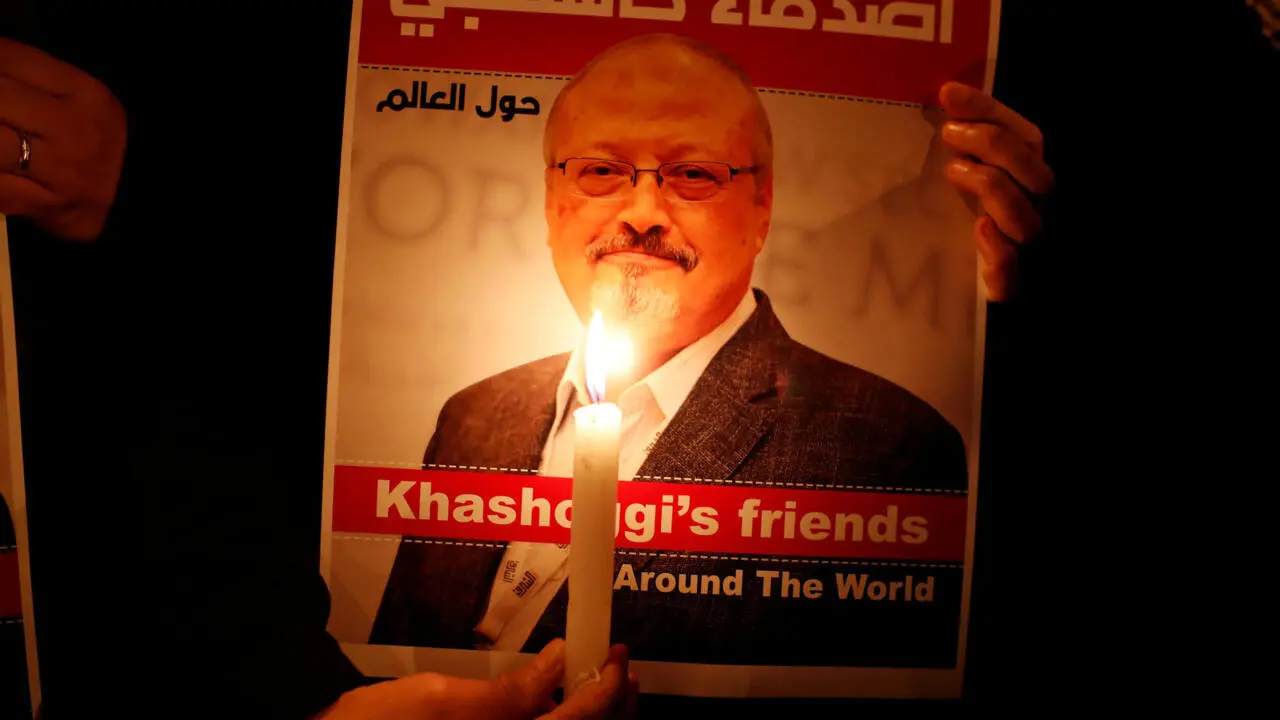
A French investigating judge has been appointed to look into the 2018 murder of Saudi journalist Jamal Khashoggi, after a complaint was filed against Crown Prince Mohammed bin Salman by human rights groups. The decision, announced on May 16, 2026, by the Paris court of appeal, overturns earlier opposition from the national anti-terrorism prosecutor's office and paves the way for a judicial investigation in France.
Khashoggi, a prominent critic of the Saudi government, was last seen entering the Saudi consulate in Istanbul on October 2, 2018, to obtain documents for his marriage. He never came out. Turkish officials later revealed that he was killed and dismembered inside the building, with his body never recovered. The murder sparked international condemnation and led to years of diplomatic tension between Saudi Arabia and Western allies.
Background of Jamal Khashoggi
Jamal Khashoggi was born in Medina, Saudi Arabia, in 1958. He began his journalism career in the 1980s, writing for local newspapers and eventually becoming a leading voice in the Arab world. He worked for the Saudi daily Al-Watan and later for the pan-Arab newspaper Al-Hayat, where he gained a reputation as a thoughtful commentator on Middle Eastern affairs. In 2017, he joined The Washington Post as a columnist, using his platform to criticize the growing authoritarianism of Crown Prince Mohammed bin Salman, particularly the crown prince's crackdown on dissent and the war in Yemen.
Khashoggi's criticism of the Saudi regime made him a target. He had been living in self-imposed exile in the United States since 2017, fearing persecution. His murder was widely seen as a state-sponsored assassination. The Saudi government initially denied any involvement, later claiming that Khashoggi died in a “fistfight,” before eventually admitting that his killing was premeditated. A Saudi trial in 2019 sentenced five people to death for the murder, but critics dismissed the proceedings as a sham.
The legal case in France
On July 20, 2022, during a visit by Crown Prince Mohammed bin Salman to France, the Geneva-based association Trial International, along with the organization Democracy for the Arab World Now (DAWN)—which employed Khashoggi—filed a complaint in Paris. They accused the crown prince of being complicit in torture, enforced disappearance, and other international crimes. Reporters Without Borders (RSF) later joined the case as a civil party.
The French anti-terrorism prosecutor argued that the complaint was inadmissible, citing a lack of sufficient connection to France. However, the Paris court of appeal ruled on May 11, 2026, that the organizations had the legal standing to sue for crimes under the universal jurisdiction principle. The investigating judge can now carry out interviews, request evidence, and take further steps.
The decision is a rare instance of a European court taking on a case involving high-level Saudi officials. It follows a similar complaint filed in Germany and legal actions in the United States, where victims' families have sued Saudi Arabia under the Justice Against Sponsors of Terrorism Act. The US intelligence community released a declassified report in February 2021 that assessed that Crown Prince Mohammed bin Salman “approved” the operation to capture or kill Khashoggi.
International reactions and implications
The French court's decision was welcomed by human rights organizations. “This is a major step toward accountability for the heinous crime that shocked the world,” said Maître Emmanuel Daoud, the lawyer representing RSF. “The investigation will now be able to establish the truth about the highest-level Saudi officials' involvement.” Similarly, Maître Henri Thulliez, representing Trial International, stated that “justice is finally taking its course, despite the obstacles placed by the Saudi regime.”
The case in France could have broader implications for diplomatic relations between Paris and Riyadh. Saudi Arabia has repeatedly denied any official involvement in the murder, but the French investigation may force the release of classified information or testimony from former officials. The French government has not officially commented on the court's decision, which came from the judiciary independently.
Meanwhile, in Turkey, a trial of Saudi suspects has been suspended due to a request from Saudi authorities for information, though Istanbul prosecutors have called for a 20-year prison sentence for two suspects. The French case is distinct because it directly targets the crown prince, whose immunity may be challenged under French law for crimes against humanity. The investigating judge will have to determine whether France has jurisdiction based on the presence of the crown prince on French soil in 2022.
The role of the French investigating judge
The French “juge d'instruction” is a unique figure in civil law systems, tasked with conducting independent investigations before a trial. In this case, the judge will have the authority to issue subpoenas, order seizures, and request mutual legal assistance from foreign countries, including Turkey and the United States. The judge can also question witnesses and experts, and if sufficient evidence is found, issue international arrest warrants. This is a powerful tool in cases of alleged high-level international crimes.
The judge will focus on the complaint's allegations of torture, deliberately stripped of any possibility of survival, and the subsequent cover-up by Saudi authorities. The disappearance and presumed death of Khashoggi constitute a “forced disappearance” under international law, which is a continuing crime as long as the fate of the victim remains unknown. The French law of 2010 allows for such cases to be prosecuted even if the acts occurred outside France, provided the suspect is a French resident or was present on French territory at the time of the crime. Mohammed bin Salman's presence in France in July 2022 thus provides the jurisdictional link.
Historical context of Khashoggi's assassination
The murder of Jamal Khashoggi was one of the most brazen acts of state-sponsored violence in modern times. According to declassified intelligence, a 15-member Saudi hit squad flew to Istanbul on the day of the murder, equipped with a bone saw and other tools. They waited for Khashoggi inside the consulate. Audio recordings obtained by Turkish intelligence showed that Khashoggi was immediately overpowered, tortured, and killed within minutes of entering the building. His body was then dismembered and removed from the premises, likely dissolved in acid.
The assassination prompted global condemnation, but Saudi Arabia retaliated with a diplomatic offensive. The kingdom expelled Canadian diplomats, imposed a boycott on Turkey, and leveraged its oil wealth to pressure critics. The murder also damaged the reputation of Crown Prince Mohammed bin Salman, who had been hailed as a reformer. The crown prince's “Vision 2030” plan for economic diversification was overshadowed by the Khashoggi case, which became a symbol of his ruthlessness.
Since 2018, multiple investigations have been launched globally. In the United States, a lawsuit by Khashoggi's fiancée, Hatice Cengiz, is ongoing, while the United Nations special rapporteur on extrajudicial executions described the killing as “an extrajudicial execution for which the state of Saudi Arabia is responsible.”
The French investigation is expected to take several years due to the complexity of the case and the need for international cooperation. The judge will have to weigh diplomatic sensitivities against the demand for justice. However, human rights advocates see the move as a turning point in holding those at the highest levels of power accountable for atrocities committed abroad.
Source: RFI News