

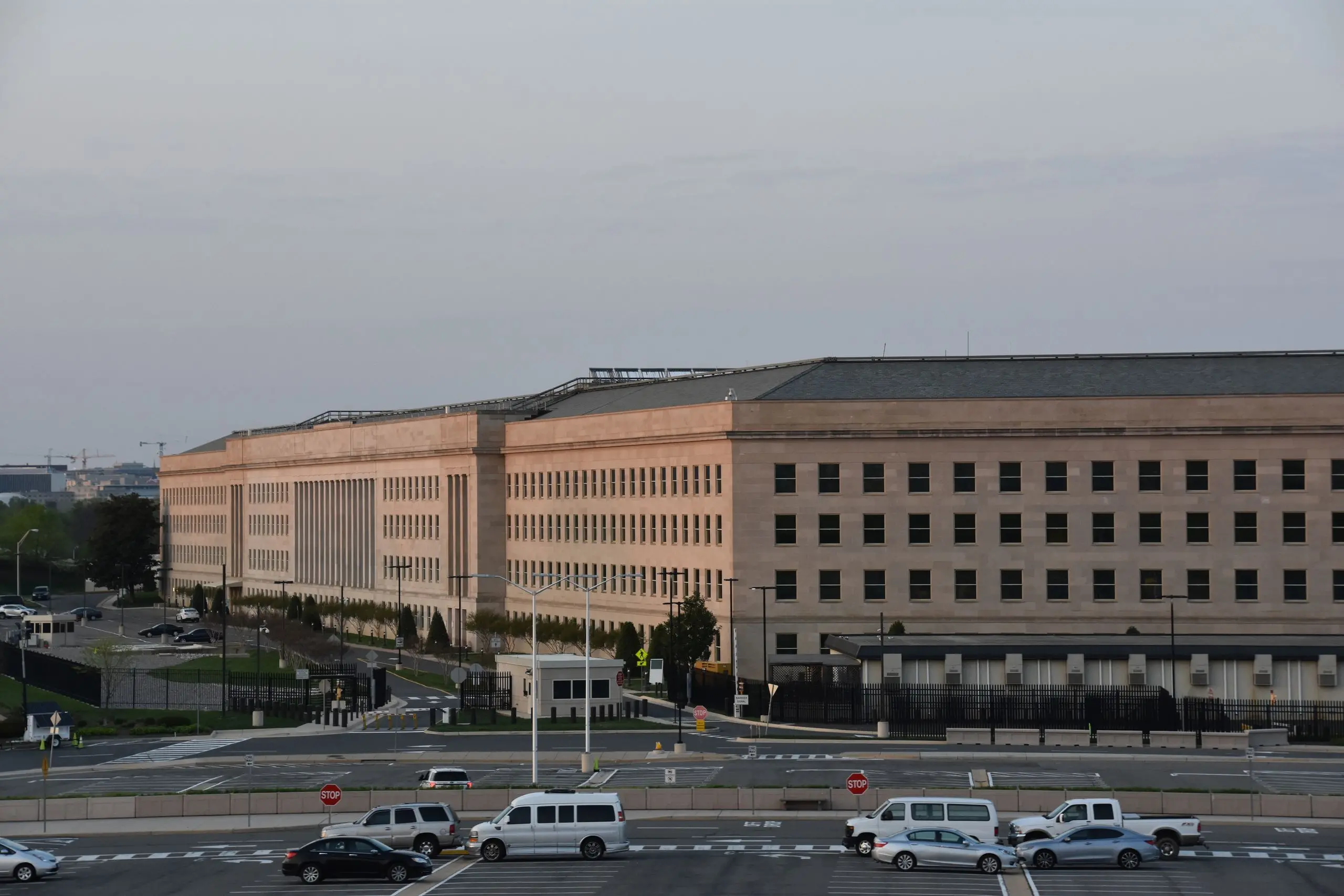
Inside the Pentagon's vast bureaucracy sits one of the military's least-discussed and most sensitive missions: a covert effort to sabotage the technology that adversaries rely on. The work is carried out by a small, tightly compartmented office whose existence is acknowledged only obliquely in budget documents, and whose operations — ranging from tampering with hardware supply chains to quietly degrading software that foreign militaries depend on — are among the most closely guarded activities in the U.S. government.
Current and former officials describe an entity that functions less like a traditional procurement program and more like a standing covert-action shop. Its personnel reportedly include engineers, intelligence officers and contractors with deep expertise in supply chains, industrial control systems and embedded software. The office does not advertise its successes, and by design most of its operations are built so that no adversary — and often no member of Congress — can attribute them to the United States.
That invisibility is the point. But it is also the source of the controversy now building around the agency, as lawmakers, watchdog groups and former officials press for answers about the legal authorities that underpin its work, the scope of its operations and the mechanisms, if any, that exist to review them before and after the fact.
A mission built on invisibility
The core concept is not new. Militaries have long sought to undermine an opponent's equipment — from sabotaging rail lines to contaminating fuel supplies. What has changed is the target set. Modern militaries run on semiconductors, software updates, commercial satellite links and globally distributed supply chains, all of which create openings that a well-resourced sabotage organization can exploit without ever firing a shot.
Officials familiar with the office's work describe several broad categories of activity. One involves intervening in the hardware supply chains that foreign militaries use, so that equipment arrives subtly compromised or fails at a critical moment. Another involves software: introducing flaws, delaying patches or manipulating the digital systems that underpin logistics, communications and weapons platforms. A third involves what one former official called "degradation by a thousand cuts" — small, deniable disruptions that individually look like routine failures but collectively erode an adversary's readiness.
Because the operations are intended to be unattributable, they are also extraordinarily difficult to oversee. A program that leaves no public footprint is hard for legislators to evaluate, hard for auditors to trace and hard for journalists to scrutinize. Even inside the Defense Department, officials said, knowledge of specific operations is often restricted to a handful of people, with details compartmented away from the very offices that would ordinarily be responsible for legal review.
How the authorities work — and where the lines blur
The most consequential questions surrounding the agency concern not what it does but under what legal authority it does it. U.S. national security operations are generally divided into two categories, and the distinction matters enormously for how much oversight applies.
Title 10 versus Title 50
Title 10 of the U.S. Code governs the armed forces and traditional military activities. Title 50 governs intelligence activities and covert action, which is defined in law as an activity designed to influence political, economic or military conditions abroad in a way the U.S. government's role is not apparent or acknowledged. Covert action carries specific statutory requirements: a presidential finding, notification to congressional intelligence committees and ongoing reporting.
The difficulty, experts say, is that sabotage of foreign technology can be plausibly framed either way. If the operation is conducted as part of an armed conflict against a declared adversary, it may be characterized as a traditional military activity. If it is conducted in peacetime, against a target that is not formally an enemy, the same operation may look much more like covert action — and should trigger the associated legal and reporting obligations.
Former officials said the gray zone between the two categories has become a persistent source of concern. "The question is always whether something is being called a military activity because it genuinely is one, or because that classification lightens the oversight burden," one former senior defense official said. That ambiguity, critics argue, creates an incentive to characterize operations in the way that maximizes operational flexibility and minimizes disclosure.
Notification: the Gang of Eight and beyond
Even when Congress is notified, the notification may be extraordinarily narrow. Sensitive covert activities are frequently briefed only to the so-called Gang of Eight — the senior leaders of both parties in the House and Senate and the leaders of the two intelligence committees. Members of the full committees, including those with direct responsibility for defense policy, may learn nothing at all.
That practice has drawn bipartisan criticism. Lawmakers have argued that restricted notification can leave the committees that authorize and fund the underlying programs effectively blind to how their money is being used. Several members have pushed for expanded briefings and for written procedures that would define which committees must be informed, and when.
Historical echoes
The debate echoes earlier chapters in the long struggle between secrecy and accountability. The Church Committee investigations of the 1970s exposed a range of covert programs conducted with minimal congressional knowledge and led directly to the modern framework of findings, notifications and committee oversight. The Iran-Contra affair in the 1980s demonstrated how a covert operation run outside established channels could spiral into a constitutional crisis. More recently, the discovery of the Stuxnet worm — a sophisticated cyber operation widely attributed to U.S. and Israeli agencies — illustrated both the effectiveness of technological sabotage and the difficulty of containing it.
Each of those episodes produced reforms, and each reform in turn created new questions about how to apply peacetime oversight frameworks to operations that are designed to be invisible. The current debate over the tech sabotage office is, in that sense, the latest iteration of a recurring problem: how a democracy supervises work that succeeds only if no one knows it happened.
The private-sector entanglement
Another source of unease is the agency's reliance on private companies. The expertise required to sabotage advanced technology — chip design, firmware, industrial control systems — resides overwhelmingly in the private sector. That means many operations are likely designed and executed with substantial contractor involvement, sometimes through front companies or intermediaries whose relationship with the government is concealed.
Executives at technology firms have privately expressed discomfort with the arrangement. Participation in covert operations can expose companies to legal risk, retaliatory action by foreign governments and reputational damage if the relationship becomes public. Contracts are frequently structured to obscure the government's role, which in turn makes it difficult for shareholders, boards and regulators to understand the risks a company has taken on.
There is also the question of what happens to the vulnerabilities discovered in the process. Security researchers have long debated whether flaws found in foreign systems should be disclosed so they can be patched, or retained for potential use. In a sabotage-focused office, the institutional incentive tilts heavily toward retention, a bias that some experts warn could leave broadly used commercial systems — including those relied on by U.S. allies and American consumers — quietly insecure.
Escalation and blowback risks
Sabotage carries an inherent risk of escalation. An operation that is discovered may be treated as an act of war; an operation that is misattributed may trigger retaliation against the wrong party. Because the office's work targets the technology supply chains that the global economy depends on, the collateral consequences of a poorly designed operation could extend well beyond the intended target.
Former officials also point to the risk of reciprocity. If the United States normalizes the sabotage of commercial technology in peacetime, it establishes a precedent that adversaries can cite to justify similar operations against American infrastructure, companies and consumers. Several officials said that concern has been raised internally, though it has rarely been discussed in public settings.
What lawmakers want to know
The questions now being posed to the Pentagon are, in broad outline, straightforward. Who approves individual operations? What legal review occurs before an operation is launched, and by whom? Which committees are notified, in what detail and on what timetable? What mechanisms exist to assess whether an operation achieved its objective, and whether its unintended effects outweighed the benefit? And what happens when something goes wrong?
Answering those questions is complicated by the fact that the office's defenders argue that excessive disclosure would destroy its utility. Secrecy, they contend, is not incidental to the mission but constitutive of it — an operation that can be traced to the United States is a diplomatic incident rather than a strategic gain. Some officials have proposed compromise arrangements, including expanded briefings to a small group of cleared staff, periodic inspector general reviews and after-action reporting to the relevant committees.
Whether such arrangements can provide meaningful accountability without compromising operational security remains an open question, and it is one that the office's own secrecy makes unusually difficult to resolve. What is clear is that a program designed to be invisible has become visible enough to prompt a debate about who, ultimately, is responsible for the things the government does that it does not want anyone to know about.
Source: TechRadar News