

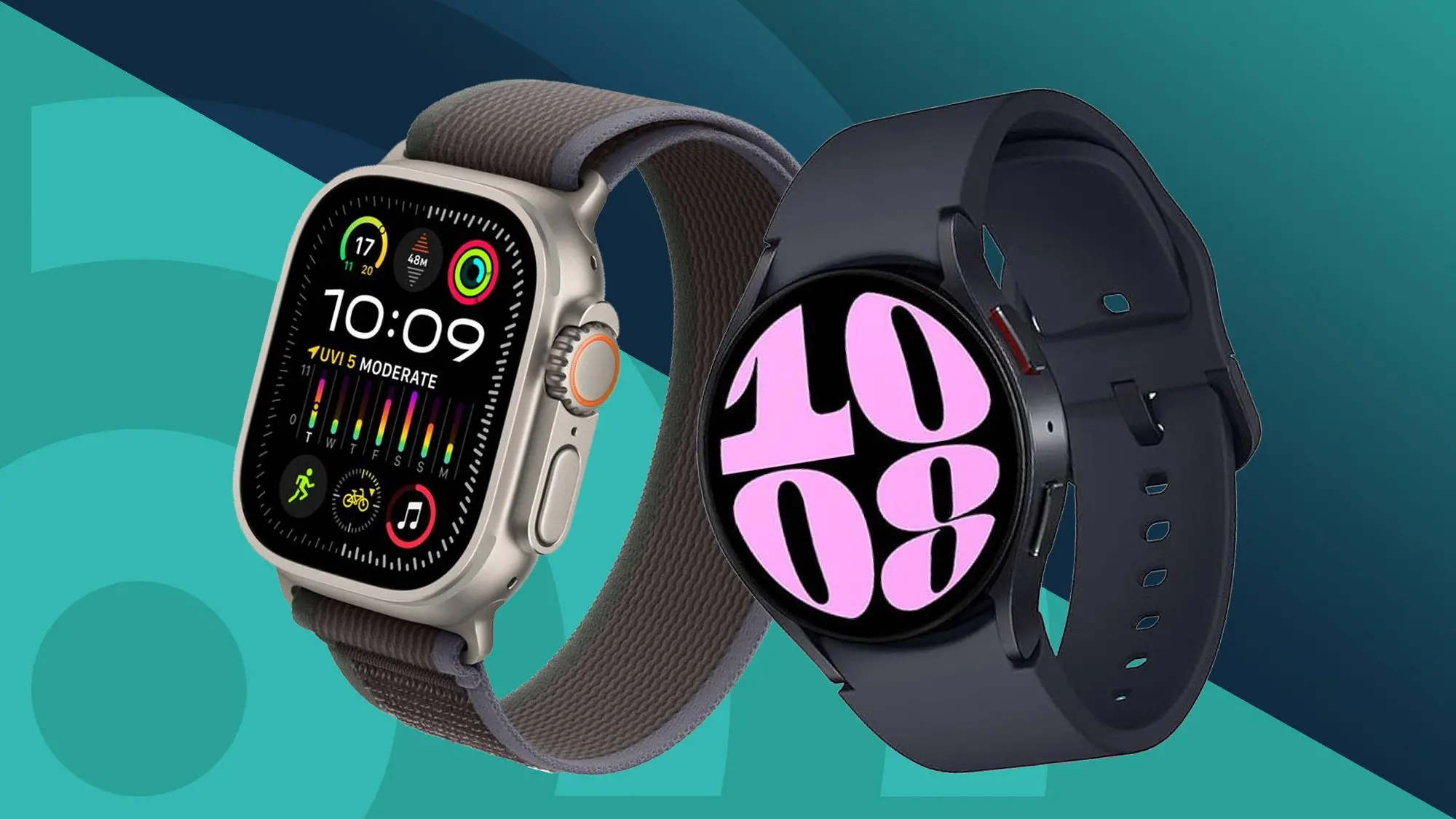
The smartwatch market in 2026 has matured into two distinct ecosystems: the Apple-dominated world of watchOS and the increasingly cohesive Android landscape led by Wear OS, Samsung, and specialist fitness brands. Choosing the right smartwatch now depends less on raw specifications and more on which phone you carry, how long you expect between charges, and which health insights you actually trust.
For iPhone owners, the decision remains straightforward: an Apple Watch is the only way to get the deepest integration with iOS, including full iMessage replies, Apple Pay, Find My, and seamless handoff. For Android users, the options are broader and more fragmented. Samsung Galaxy Watch models offer the tightest fit with Galaxy phones, Google Pixel Watch models showcase the cleanest Wear OS experience, and Garmin, OnePlus, and Huawei compete on battery life and outdoor capability.
Key facts at a glance
- Best overall for iPhone: Apple Watch Ultra 3, with a titanium case, satellite messaging, and multi-day battery life in low-power mode.
- Best mainstream iPhone: Apple Watch Series 11, offering the widest health sensor suite in a thinner, lighter design.
- Best budget iPhone: Apple Watch SE 3, bringing core fitness tracking and crash detection to a lower price.
- Best for Samsung phones: Samsung Galaxy Watch 8 Classic, with a rotating bezel, Wear OS 6, and advanced sleep apnea detection.
- Best for Pixel phones: Google Pixel Watch 4, featuring Fitbit health tracking, Gemini AI assistance, and a brighter domed display.
- Best battery life: Garmin Fenix 8 Solar, which can run for weeks in smartwatch mode and uses solar charging to extend expeditions.
- Best Wear OS battery: OnePlus Watch 3, which uses a dual-engine architecture to stretch typical use to five days.
- Best screenless tracker: Whoop 5.0 and Oura Ring 4 for users who want recovery, sleep, and strain data without a wrist display.
Apple Watch Ultra 3: the benchmark for iPhone
The Apple Watch Ultra 3 is expected to remain the most capable smartwatch for iPhone users in 2026. It pairs a 49mm titanium case with a sapphire crystal display that reaches up to 3,000 nits, making it readable in direct sunlight. The larger battery is rated for roughly 36 hours in normal use and up to 72 hours in low-power mode, which is still short of Garmin but far ahead of standard Apple Watch models.
New for this generation is satellite messaging for emergency SOS, a feature that lets hikers and runners send texts without cellular coverage. The Ultra 3 also adds dual-frequency GPS, which improves route accuracy in cities and canyons. Health features include an ECG app, blood oxygen monitoring, sleep apnea notifications, and temperature sensing for cycle tracking. The Action button remains customizable for workouts, diving, or shortcuts.
Apple Watch Series 11: the best balance
The Apple Watch Series 11 is the default recommendation for most iPhone owners. It comes in 41mm and 45mm sizes, with an always-on LTPO OLED display and a thinner chassis than previous generations. Battery life is still about 18 hours, but fast charging can reach 80 percent in roughly 45 minutes.
Health sensors include electrical heart rate for ECG, optical heart rate, blood oxygen, temperature sensing, and sleep apnea detection. The Series 11 also supports hypertension notifications, which alert users to patterns that may indicate elevated blood pressure. For fitness, it offers automatic workout detection, custom training plans, and a new race route feature that helps runners compare performance on the same course over time.
Apple Watch SE 3: budget pick
The Apple Watch SE 3 is the entry point for watchOS. It keeps the core experience: notifications, Apple Pay, workout tracking, sleep stages, crash detection, and fall detection. It lacks an always-on display, ECG, blood oxygen, and temperature sensing, but it uses the same processor as the Series 11, so it feels fast. For families, the SE 3 supports Schooltime and Family Setup, allowing a child to use a watch without an iPhone.
Samsung Galaxy Watch 8 Classic: best for Android power users
For Android users, especially those with a Samsung Galaxy phone, the Galaxy Watch 8 Classic is the most feature-complete option. It brings back the physical rotating bezel, which makes navigating Wear OS 6 effortless. The 3nm Exynos W1000 chip improves battery efficiency and AI processing.
Health tracking includes body composition analysis, sleep apnea detection, ECG, blood pressure monitoring in supported regions, and a new antioxidant index that estimates cellular stress. The watch also offers dual-frequency GPS and a 40-hour battery in typical use. Samsung Health integration is deep, and Galaxy AI can summarize sleep reports and suggest recovery goals.
Google Pixel Watch 4: the cleanest Wear OS experience
The Google Pixel Watch 4 is the best smartwatch for Pixel phone owners and anyone who wants a pure Google experience. It uses a domed actua display that is brighter and more durable than previous models. Fitbit integration remains central, with continuous heart rate tracking, sleep score, stress management, and ECG.
The Pixel Watch 4 adds Gemini AI for voice queries and health coaching. You can ask the watch to analyze a workout, suggest a bedtime routine, or explain a sleep trend. Battery life is around 24 hours with always-on display and up to 48 hours in battery saver mode. LTE models support emergency calling and fall detection.
Garmin Fenix 8 Solar: best battery and outdoor navigation
Garmin remains the gold standard for battery life and outdoor training. The Fenix 8 Solar uses a sunlight-readable MIP display and solar charging to achieve up to 29 days in smartwatch mode and 48 days in expedition mode. It offers multi-band GNSS, topographical maps, dive support, and advanced training metrics like VO2 max, training readiness, and endurance score.
Unlike Apple and Samsung, Garmin works equally well with iPhone and Android. It lacks a full app store and polished smart assistant, but it excels at long expeditions, ultra running, triathlon, and hiking. The Fenix 8 also includes ECG in some regions and a built-in LED flashlight.
OnePlus Watch 3: Wear OS with multi-day battery
The OnePlus Watch 3 is a strong alternative for Android users who want Wear OS but refuse to charge daily. It uses a dual-engine architecture: a Snapdragon W5 chip for demanding tasks and a low-power microcontroller for background health tracking. This allows up to five days of typical use and 16 days in power saver mode.
It has a 1.5-inch AMOLED display, 60Hz refresh rate, and a stainless steel case. Health features include ECG, blood oxygen, sleep apnea, and stress monitoring. The watch runs Wear OS 5 with OnePlus-specific health algorithms, and it supports Google Wallet, Google Maps, and third-party apps.
Huawei Watch GT 6 Pro: long battery for Android
Huawei continues to push battery life with the Watch GT 6 Pro, which can last up to 21 days in typical use. It offers a titanium bezel, sapphire glass, and an AMOLED display. Health tracking includes ECG, arterial stiffness detection, and sleep breathing awareness. The main drawback for many users is the lack of Google apps and services, though it works with Android and iOS for basic notifications and fitness data.
Whoop 5.0 and Oura Ring 4: screenless alternatives
Not everyone wants another screen. The Whoop 5.0 is a subscription-based fitness tracker that focuses on strain, recovery, and sleep. It has no display, which makes it ideal for athletes who prefer a traditional watch. The Oura Ring 4 is a smart ring that tracks sleep, readiness, heart rate, and temperature. Both are platform-agnostic and work with iPhone and Android.
What to consider before buying
Compatibility: Apple Watch only works with iPhone. Samsung Galaxy Watch works best with Galaxy phones but can pair with other Android devices. Wear OS watches work with Android and, in some cases, iOS with limited features. Garmin and Whoop work with both platforms.
Battery life: Apple Watch models last 18 to 36 hours. Samsung and Pixel watches last 24 to 40 hours. OnePlus, Huawei, and Garmin can last from five days to several weeks.
Health sensors: Look for ECG, blood oxygen, temperature sensing, sleep apnea detection, and hypertension notifications. Not all features are available in all regions.
Durability: Titanium and sapphire are more scratch-resistant. Water resistance ranges from 5 ATM to 10 ATM, with dive ratings on some models.
AI and coaching: Apple, Samsung, and Google are adding on-device AI to summarize health data and provide coaching. Garmin focuses on training metrics rather than conversational AI.
The defining trend of 2026 is the integration of on-device AI with medical-grade sensors, as seen in the Apple Watch Series 11, Samsung Galaxy Watch 8, and Google Pixel Watch 4, each of which now processes health data locally to deliver faster, more private insights.
Source: TechRadar News