

The Question Behind the Question
Security leaders evaluating artificial intelligence often begin with a familiar inquiry: What data was this model trained on? The concern is understandable. Organizations want to know whether proprietary information, customer records, source code, or internal documents could become part of a model's general knowledge or leak through future outputs. That question matters, and dismissing it would be a mistake.
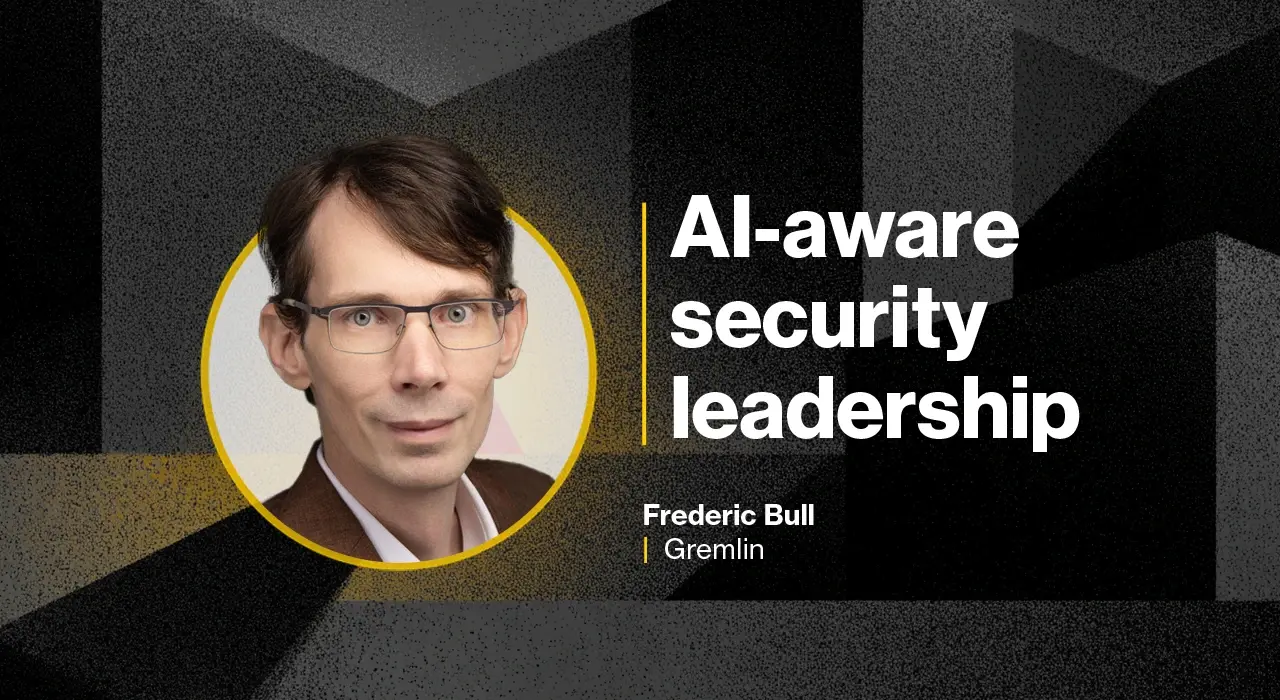
But a security officer at a resilience engineering company argues that the training-data question is only one layer of a much larger problem. A less common and more operationally useful question is: How do you maintain authority and integrity over the data the model can reach, use, and act upon? That shifts the discussion from provenance to permissions, from static data sets to live systems, and from model behavior to access control.
The distinction is important because most enterprise AI risk is no longer confined to a model that answers questions in a chat window. AI systems increasingly sit inside workflows, call APIs, retrieve documents, summarize records, generate code, and act through agents. In that environment, knowing what data was used during training is necessary but not sufficient. Leaders also need to know what data the system can access at runtime, which actions it can take, who authorized those actions, and how those permissions are limited.
Key Facts at a Glance
- The most common AI security question focuses on training data and confidentiality, but it leaves gaps in a layered defense.
- A better question is how to preserve authority and integrity over data that AI systems can access and act upon.
- Least privilege, authentication, authorization, session-based role-based access control, and scoped permissions remain foundational.
- AI is narrowing the historical skill asymmetry between attackers and defenders, increasing both speed and scale of exploitation.
- Vulnerability reporting has surged, straining classification systems and security teams.
- One security team handled roughly nine times as many vulnerabilities with the same staff by using large language models and supporting harnesses, while slightly reducing time to remediation.
- Hiring now emphasizes experienced operators who can recognize confidently wrong AI output and understand technical, compliance, and governance contexts.
- AI is moving application security earlier into the software development lifecycle through curated policy checks and real-time guidance.
Why Least Privilege Still Matters for AI Agents
For decades, least privilege has been one of the bedrock principles of enterprise security. Users, services, and applications should receive only the access they need to perform a specific task, for only as long as they need it. Authentication proves identity. Authorization determines what an identity can do. Role-based access control maps permissions to roles. When implemented well, these controls reduce blast radius, limit lateral movement, and make audit trails meaningful.
AI agents do not change that principle. They make it more urgent. An AI agent that can read a customer database, send email, modify tickets, or trigger deployments is not just a model. It is an actor with credentials, sessions, and permissions. If those permissions are broad, static, or inherited from a human administrator, the agent can become a high-speed path to data exposure or operational damage.
The security officer points to session-based RBAC delivered through standards such as OpenID Connect and on-behalf-of token flows, combined with permission scoping appropriate to the context. In practical terms, that means an AI agent should not inherit the full authority of the person who invoked it. It should receive a narrow, time-bound session that reflects the task at hand. If the agent is helping an employee draft a response to a customer complaint, it may need access to that customer's case record, but not to payroll, source code, or the entire customer database.
Permission scoping also matters for agent-to-agent communication. When one AI system delegates work to another, each hop should carry only the authority required for that step. Without that discipline, a chain of agents can amplify access far beyond what any human intended. With it, organizations can build architectures that keep a human in the loop at critical decision points, allowing operators to review, approve, or stop actions before damage occurs.
This is not a theoretical concern. The same access controls that protect human users also protect against confused-deputy problems, prompt injection, and tool misuse. If an attacker can influence an AI agent's instructions, the damage depends heavily on what the agent is authorized to do. Least privilege does not make prompt injection impossible, but it can turn a catastrophic action into a blocked request.
The Attacker's Toolkit: Faster, Broader, and Less Specialized
Security leaders often ask how the attacker's toolkit has changed. The most visible change is speed. Vulnerability discovery, exploit development, and exploitation are compressing into shorter windows. Even well-resourced adversaries race against time, and defenders face a constant pressure to patch, mitigate, and detect faster than exploitation can spread.
Speed alone does not capture the shift. Vulnerability reporting has increased sharply, and classification systems have struggled to keep up. The National Vulnerability Database has had to reprioritize classifications, leaving many reported vulnerabilities unclassified. That backlog creates practical problems for defenders who rely on severity scores, product mappings, and exploit intelligence to prioritize remediation.
The deeper mechanism is an erosion of the skill asymmetry that the security industry has historically relied upon. Finding the conditions for an exploit, designing a working exploit, testing it, and deploying it once required significant expertise. AI has moved that asymmetry closer to even. Exploitable contexts can be found more quickly, and methods to leverage them can be devised and implemented by people who might otherwise lack the ability. In some cases, those less experienced actors can move faster than skilled practitioners because they are using automation to compress the research and development cycle.
That trend is likely to intensify as models receive more contextual data and become better at recognizing patterns across code, configurations, logs, and documentation. External controls such as government regulation may alter the pace, but the underlying dynamic is clear. If the ability gap continues to close, the security problem becomes partly a question of human nature and partly a question of scale: how large and effective is the red team compared with the blue team?
The Staffing Gap Has Changed Shape
Security teams are famously understaffed, and AI has not magically solved that problem. It has changed what the gap looks like. The security officer describes a period in which the team processed just over nine times the number of vulnerabilities compared with the previous year while maintaining the same staffing levels. That volume created a real process gap. Using large language models and supporting harnesses, the team handled the increase without additional headcount and reduced time to remediation by just over five percent.
That outcome was not trivial. It required experienced engineers to design the system, integrate the tools, and keep the workflow current as the underlying models evolved. The lesson is not that AI replaces security staff. It is that AI can increase throughput when experienced people build the guardrails, define the criteria, and review the output. Without that human layer, higher volume can simply produce faster mistakes.
The staffing challenge also affects how teams allocate attention. AI can triage alerts, summarize findings, draft remediation guidance, and generate code changes. But someone still has to decide whether the output is correct, whether it satisfies compliance requirements, and whether it introduces new risk. That work demands broad technical knowledge and familiarity with governance frameworks, not just prompt-writing skill.
Hiring for Judgment, Not Just Tool Use
AI is changing what security leaders look for in talent. Current systems can produce work that is on par with many entry-level analysts and engineers. The differentiator is whether an experienced operator can recognize confidently wrong output and correct it. That requires a broad range of knowledge across diverse technical systems, as well as an understanding of the compliance and governance requirements that drive many security programs.
This raises the bar for all talent and creates a pipeline problem. New professionals need experience to operate AI systems effectively, but entry-level tasks that once provided that experience are increasingly automated. If organizations are not deliberate about developing judgment, they may find themselves with tools that can generate answers but fewer people who can tell whether those answers are safe.
There is also a longer-term concern about model collapse and generational processing. If the majority of inputs into AI systems are themselves generated by AI, the diversity of training data can decline. LLMs need input diversity in a way that is similar to the need for genetic diversity in a population. Today, that diversity often requires human curation. Labor and data are usually treated as separate problems, but historically labor was how fresh inputs entered many systems. Minimizing human involvement at the moment when diverse inputs may be most valuable could create new risks for both security and model quality.
Where AI Is Delivering Real Security Value
The most promising development is not a marketing slogan about autonomous defense. It is the ability to move security concerns earlier in the software development lifecycle. AI can evaluate code, designs, and configuration changes against a curated list of criteria and policies, surfacing concerns and giving guidance in real time rather than waiting for a bottlenecked review period. Developers can propose and implement solutions with specialist review, often avoiding a cycle of architecture and design requirements filtering back down the pipeline.
That shift has practical value. Security teams can focus on policy quality, exception handling, and high-risk changes while routine checks happen closer to the point of creation. Many basic tasks that previously depended on external development teams can become internal side projects when the team knows an LLM can handle part of the work with explicit review. The result is not a replacement for security expertise. It is a change in cadence, with security input arriving earlier and more continuously.
For leaders, the operational takeaway is to pair AI adoption with permission discipline, human review, and realistic staffing plans. The training-data question should remain on the checklist, but it cannot be the only question. The organizations that manage AI risk well will ask who and what the model can act as, what data it can reach at runtime, how those permissions are scoped, and which human is accountable when an agent's confident output is wrong.
Source: Help Net Security News