

Royal Visit Concludes on a High Note
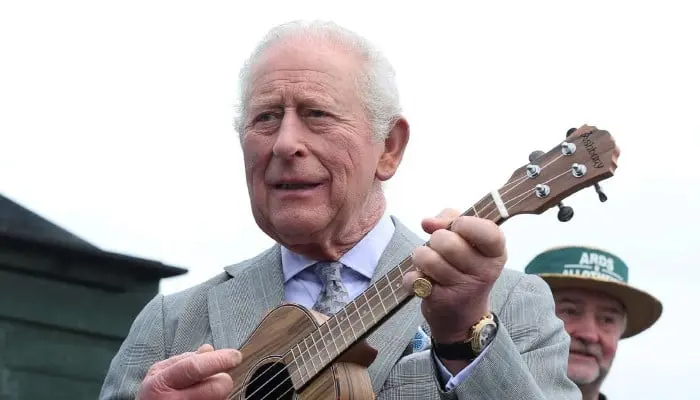
King Charles III brought his two-day visit to Northern Ireland to a close with an unexpected musical interlude that delighted onlookers and underscored his personal appreciation for the arts. The surprise moment occurred during the final engagement in Belfast, where the monarch joined a group of local musicians for an impromptu performance. The event was part of a broader itinerary designed to foster unity and celebrate the diverse cultural tapestry of Northern Ireland, following a series of meetings with community leaders, veterans, and young people.
The king, known for his longstanding interest in music and the environment, demonstrated his skills on the piano while Queen Camilla looked on, tapping her feet to the rhythm. The piece, a traditional Irish air, resonated with the audience, many of whom had gathered outside the venue hoping to catch a glimpse of the royal couple. Onlookers described the moment as spontaneous and heartfelt, marking a departure from the more formal aspects of royal engagements.
Background of the Visits
This visit was King Charles's first major tour of Northern Ireland since his accession to the throne. It followed a pattern established by his mother, Queen Elizabeth II, who made numerous visits to the region during her reign. The tour included stops in towns such as Lisburn, Armagh, and Derry, where the royal couple met with representatives from various sectors, including education, agriculture, and the arts. The itinerary was carefully curated to highlight initiatives promoting cross-community cooperation and economic development.
Northern Ireland has a complex political and social history, with the Good Friday Agreement of 1998 marking a pivotal step toward peace. Royal visits often serve as symbols of stability and continuity, with the monarchy acting as a neutral institution above political divisions. King Charles has expressed a deep commitment to understanding the region's challenges and opportunities, building on his previous work as Prince of Wales, when he frequently visited community projects and cultural events.
The Musical Moment in Detail
The impromptu performance took place at the Lyric Theatre in Belfast, a venue known for its support of local arts. The king was invited to view an exhibition of traditional Irish instruments when he was handed a penny whistle. After a brief moment of hesitation, he launched into a lively rendition of “The Derry Air” (also known as “Londonderry Air”), a tune that has become synonymous with Northern Irish identity. His playing was met with enthusiastic applause, and he later joined a small ensemble of folk musicians for a group piece.
Queen Camilla, who has often accompanied her husband on public engagements, participated by encouraging the musicians and chatting with attendees about their own musical experiences. The couple's easy rapport with the performers highlighted their shared enjoyment of the arts. This spontaneous interaction was captured on video and quickly circulated on social media, generating positive comments from both royal watchers and residents of Northern Ireland.
Cultural Significance
Music holds a special place in Northern Ireland's cultural landscape, serving as a bridge between communities. Traditional Irish music, with its deep roots in both nationalist and unionist traditions, offers a shared language that transcends political divisions. King Charles's decision to engage with this art form was seen as a subtle but powerful gesture of inclusion. His own musical background is well documented: he studied cello as a youth and has been a patron of numerous orchestras and music education programs.
The surprise performance also reflected the monarchy's evolving approach to public engagement. Under King Charles, there has been a noticeable shift toward more informal, humanizing interactions. This contrasts with the more formal, state-oriented visits of previous decades. By participating in a cultural activity, the king signaled his desire to connect with people on a personal level, beyond the protocols of royalty.
Historical Context of Royal Tours in Northern Ireland
Royal visits to Northern Ireland have a long and sometimes turbulent history. During the Troubles (c. 1968–1998), such tours were often fraught with security concerns, and the monarchy was sometimes seen as a target by paramilitary groups. Queen Elizabeth II’s historic handshake with former IRA commander Martin McGuinness in 2012 symbolized a new era of reconciliation. King Charles continued this trajectory by meeting with representatives from both nationalist and unionist communities during his visit.
The current political landscape in Northern Ireland remains delicate, with power-sharing arrangements frequently under strain. The recent restoration of the Northern Ireland Assembly has provided a degree of stability, but underlying tensions linger. Royal visits serve as a reminder of the broader United Kingdom framework, while also acknowledging the region's unique identity. King Charles’s emphasis on cultural diplomacy is a departure from earlier, more ceremonial approaches, reflecting his personal interests and the monarchy's adaptation to modern times.
Other Engagements During the Tour
Beyond the musical finale, the royal couple participated in a packed schedule. On the first day, they visited a farm in County Antrim to learn about sustainable agriculture and climate change mitigation—a topic close to the king's heart. He has long been an advocate for organic farming and environmental conservation, and he took the opportunity to discuss these issues with local farmers.
In Armagh, they attended a reception for community volunteers, where King Charles praised the resilience and generosity of Northern Irish people. He remarked on the importance of grassroots efforts in building a peaceful society. Queen Camilla, who has championed literacy and domestic abuse awareness, visited a women’s shelter and read to children at a library.
The couple also met with young people involved in a cross-community sports program, emphasizing the role of sport in bridging divides. These engagements were designed to showcase the diversity of life in Northern Ireland and to highlight areas where progress has been made. The surprise musical moment, however, garnered the most media attention, as it provided a rare glimpse of the king's playful side.
Public and Media Reactions
Local media outlets praised the visit as a success, noting the warmth of the crowds that turned out to greet the royals. The Belfast Telegraph ran a front-page story titled “Charles Strikes the Right Note,” while social media users shared videos of the performance with comments such as “Our king has great taste in music” and “This is what unity looks like.” Some political figures also weighed in, with First Minister Michelle O’Neill (Sinn Féin) describing the moment as “a positive symbol of shared culture,” and Deputy First Minister Emma Little-Pengelly (DUP) calling it “a delightful surprise.”
Not all reactions were uniformly positive; a small number of republican activists staged a protest in Derry, citing ongoing concerns about British sovereignty. However, these were largely peaceful and did not overshadow the overall tone of the visit. The royal couple's security detail was highly visible but discreet, allowing for a relaxed atmosphere at most events.
King Charles's Personal Connection to Music
Music has been a constant in King Charles's life. As a child, he learned to play the cello and later took up the piano. He has served as patron of the Royal College of Music and the Royal Opera House, and he frequently attends concerts and performances. In his speeches, he has emphasized the ability of music to heal and bring people together. His impromptu performance in Belfast was consistent with this belief, demonstrating that even a monarch can use art to transcend formal boundaries.
His interest is not limited to classical or traditional forms; he has also shown appreciation for jazz and world music. The choice of “Londonderry Air” was particularly apt, as it is a tune that belongs to all traditions in Northern Ireland. The melody, often used for the song “Danny Boy,” is universally recognized and evokes deep emotional responses. By playing it, the king connected with a shared cultural heritage.
Implications for Future Royal Engagements
This visit may set a precedent for future royal tours, both within the UK and abroad. The positive reception of the musical moment suggests that informal, participatory engagements resonate with modern audiences. Royal aides are likely to take note, potentially incorporating more interactive elements into future itineraries. For King Charles, who has often been portrayed as reserved or aloof, such moments help humanize his public image.
It also reinforces his commitment to the arts as a tool for diplomacy. In a world increasingly divided by politics and ideology, cultural soft power can be a unifying force. The king's willingness to step outside his comfort zone and perform in public is a testament to his dedication to public service, even at the age of 75. His reign, still in its early stages, promises a blend of tradition and innovation.
The Role of Queen Camilla
Queen Camilla played a supportive but essential role throughout the visit. Her own interests in literature and animal welfare were highlighted in separate engagements. At the musical event, she was seen chatting animatedly with musicians and exchanging stories about their instruments. Her relaxed demeanor helped put attendees at ease, contributing to the informal atmosphere. The couple's teamwork was evident, and their mutual affection was on display.
Camilla's influence on the monarchy's public relations has been notable. Since becoming queen, she has taken on a more prominent role, often accompanying her husband on tours and representing him at events. Her ability to connect with people from all walks of life complements Charles's more serious demeanor. Together, they form a balanced and effective duo.
Conclusion of the Article (Natural Ending)
As the royal couple departed Northern Ireland, the memory of the surprise musical moment lingered. It served as a reminder that even in a region marked by division, a shared love of music can create a fleeting but powerful sense of unity. King Charles's reign continues to be defined by small gestures that speak volumes about his character and aspirations. The tour, though brief, left a lasting impression on those who participated, and the sound of the penny whistle will not soon be forgotten.
Source: Jang News