

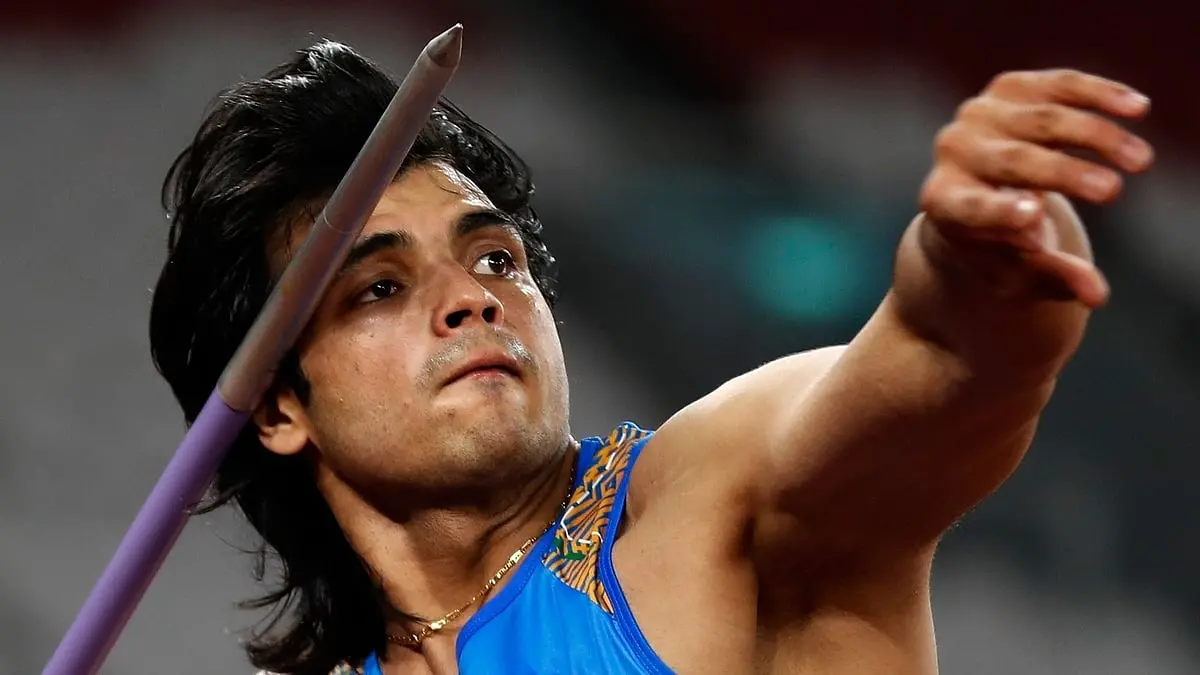
Key Facts
- Haryana Chief Minister Manohar Lal Khattar announced a cash reward of Rs 6 crore and a government job for Neeraj Chopra.
- Chopra won India's first Olympic gold medal in athletics with an 87.58-metre javelin throw at the Tokyo Olympics.
- He became only the second Indian after Abhinav Bindra to win an individual Olympic gold.
- Chopra is a Subedar with 4 Rajputana Rifles in the Indian Army and hails from Panipat district in Haryana.
- Defence Minister Rajnath Singh, Punjab Chief Minister Amarinder Singh, Army Chief General Manoj Mukund Naravane and the Indian Army congratulated him.
- In 2018, Chopra became the first Indian athlete to win javelin gold at both the Asian Games and the Commonwealth Games.
A Historic Throw in Tokyo
Neeraj Chopra's gold medal in the men's javelin throw at the Tokyo Olympics ended one of the longest waits in Indian sport. The 23-year-old from Panipat district in Haryana hurled the javelin to 87.58 metres, a mark that proved enough to hold off a strong field and place him at the top of the podium. The final had been billed as a contest involving several leading throwers, including athletes from the Czech Republic, but Chopra's first-round effort set the tone and none of his rivals could surpass it. Jakub Vadlejch took silver, while former world champion Vitezslav Vesely won bronze.
The result was more than a personal triumph. It was India's first Olympic gold medal in athletics, a breakthrough for a country whose Olympic history had been dominated by hockey golds and a small number of individual successes. Before Tokyo, India's only individual Olympic gold had come from Abhinav Bindra in shooting at the 2008 Beijing Games. Chopra's victory made him the second Indian to achieve that distinction and the first to do so in track and field. It also gave India its first gold medal of the Tokyo Games, elevating the javelin final into one of the most-watched moments of the country's sporting year.
Haryana's Reward and Recognition
Haryana Chief Minister Manohar Lal Khattar moved quickly to recognise the achievement, announcing a cash reward of Rs 6 crore and a government job for Chopra. The announcement reflected both the scale of the victory and the state's established practice of rewarding its top athletes with financial support and employment. Haryana has long been associated with producing sportspersons in wrestling, boxing, shooting, athletics and other disciplines, and a reward of this size underlined the state government's effort to treat an Olympic gold as a landmark moment.
Khattar congratulated Chopra and said the athlete had not only won a medal but also captured the hearts of people across the country. He described the victory as the fulfilment of a long wait and said the nation was proud of the javelin thrower. The chief minister also spoke to Chopra's father, Satish Chopra, over the phone to convey his congratulations. In a social media post, Khattar praised the family and said Haryana's son had created history by unfurling the tricolour at the Tokyo Olympics.
Reactions from National Leaders and the Army
Defence Minister Rajnath Singh also congratulated Chopra, describing the gold medal in the javelin throw as unprecedented. Singh said the country was proud of the athlete for creating history. He noted that Chopra is a Subedar with 4 Rajputana Rifles in the Indian Army and said the victory had brought laurels for the armed forces. The defence minister added that Chopra had performed like a true soldier at the Olympics and that the moment was historic and proud for the entire country, including the Indian armed forces.
Indian Army Chief General Manoj Mukund Naravane and all ranks of the force joined in congratulating Chopra for his historic achievement. The army's recognition carried particular weight because Chopra has balanced a military career with top-level athletics. His identity as a soldier-athlete became part of the broader story of the medal, with officials pointing to the discipline and commitment required to compete at the highest level while serving in the armed forces.
Punjab Chief Minister Amarinder Singh also praised Chopra, saying the athlete had created history and made the whole country proud. He referred to the 87.58-metre winning throw as a performance that would become part of the legends of the track and field arena. In a social media message, he said India owed Chopra a debt of gratitude and ended with a salute to the armed forces. The reactions from across the political spectrum showed how the gold medal had become a national moment rather than a purely sporting one.
Chopra's Journey to the Top
Chopra's rise had been building for several years before Tokyo. Born in 1997 in Panipat district, he came from a family with agricultural roots and initially took to sport through a desire to improve his fitness. His talent in javelin throw soon became evident, and he developed into one of India's most promising track and field athletes. In 2016, he won the gold medal at the World Under-20 Championships in Bydgoszcz, Poland, becoming the first Indian to win a world title at that level. The result signalled that a new generation of Indian athletes was beginning to compete with the best in field events.
He followed that breakthrough with a series of strong performances. In 2017, he won gold at the Asian Athletics Championships. In 2018, he won the Commonwealth Games gold in Gold Coast with a throw of 86.47 metres and then took the Asian Games gold in Jakarta with an effort of 88.06 metres. Those victories made him the first Indian athlete to win javelin gold at both the Commonwealth Games and the Asian Games. They also established him as a consistent performer in major competitions, a quality that would prove crucial in Tokyo.
The Tokyo Olympics were originally scheduled for 2020 but were postponed by a year because of the COVID-19 pandemic. The delay disrupted training and competition schedules around the world, and athletes had to adapt to restricted conditions. Chopra's preparation attracted attention because he had undergone rehabilitation and training abroad, and his progress was watched closely by Indian fans hoping for a track and field medal. He entered the Olympics with a strong reputation but also with the weight of expectation that comes with being among the country's leading medal prospects.
The Final and Its Significance
In the qualification round, Chopra threw 86.65 metres to comfortably reach the final. In the final, he opened with 87.58 metres, a throw that immediately put pressure on the rest of the field. The mark stood as the best of the competition, and the Indian athlete managed the remaining attempts with composure. The final featured experienced competitors, including Vadlejch and Vesely, but neither could produce a throw good enough to overtake Chopra. The result was decided by a single, decisive effort that combined technique, power and calm under pressure.
The gold medal carried significance beyond the numbers. India had waited decades for an athletics gold, and previous near-misses had often become part of the country's sporting folklore. The victory in Tokyo gave Indian athletics a new reference point and showed that success in field events was possible at the highest level. It also placed Chopra in a small group of Indian individual Olympic champions, a distinction that carries lasting recognition. For Haryana, the medal reinforced the state's reputation as a nursery of Indian sport and gave the government a reason to celebrate one of its own.
The reward announced by Khattar also raised questions about how states support athletes after major victories. Cash awards and government jobs have become common ways for state governments to honour Olympic medallists, and Haryana's announcement was among the most generous. Such rewards can provide financial security and encourage young athletes from smaller towns and rural areas. At the same time, the focus on one spectacular result can overshadow the long-term investment needed in coaching, infrastructure and competition exposure. Chopra's journey illustrated both the importance of individual talent and the role of sustained support systems.
A New Benchmark for Indian Sport
Chopra's victory was celebrated not only for what it meant to Indian athletics but also for what it suggested about the country's changing sporting landscape. Indian athletes have increasingly made their mark in shooting, wrestling, badminton, boxing and weightlifting, and the javelin gold added track and field to that list. The image of an Indian athlete standing atop an Olympic podium in a field event was a powerful one, particularly for young people who might previously have seen such success as distant or unlikely.
The 87.58-metre throw also became a technical benchmark. It was not a lucky result but the product of a structured approach to the event, with attention to run-up, release angle and rhythm. Chopra's ability to produce his best throw early in the final and then defend the lead showed competitive maturity. In an event where margins are measured in centimetres, the difference between gold and silver can come down to a single attempt, and the Indian athlete delivered when it mattered most.
With the medal, Chopra joined the select group of Indian athletes whose names became synonymous with Olympic history. The comparisons with Abhinav Bindra were inevitable, but Chopra's achievement also stood on its own: a first athletics gold, a first track and field gold, and a moment that brought javelin throw into the mainstream of Indian sporting conversation. The reward of Rs 6 crore and a government job was a formal recognition of that achievement, but the public response showed that the victory had already acquired a meaning beyond material reward.
The announcement by the Haryana government, the messages from national leaders and the army, and the congratulations from other states all reflected the same fact: Neeraj Chopra's gold medal had become a shared national achievement. The 23-year-old had arrived in Tokyo as a promising athlete and left as an Olympic champion. His 87.58-metre throw in the final will remain the defining image of India's athletics campaign at the Games, and the reward announced in Haryana will ensure that the achievement is remembered in official records as well as in public memory.
Source: TheQuint News