

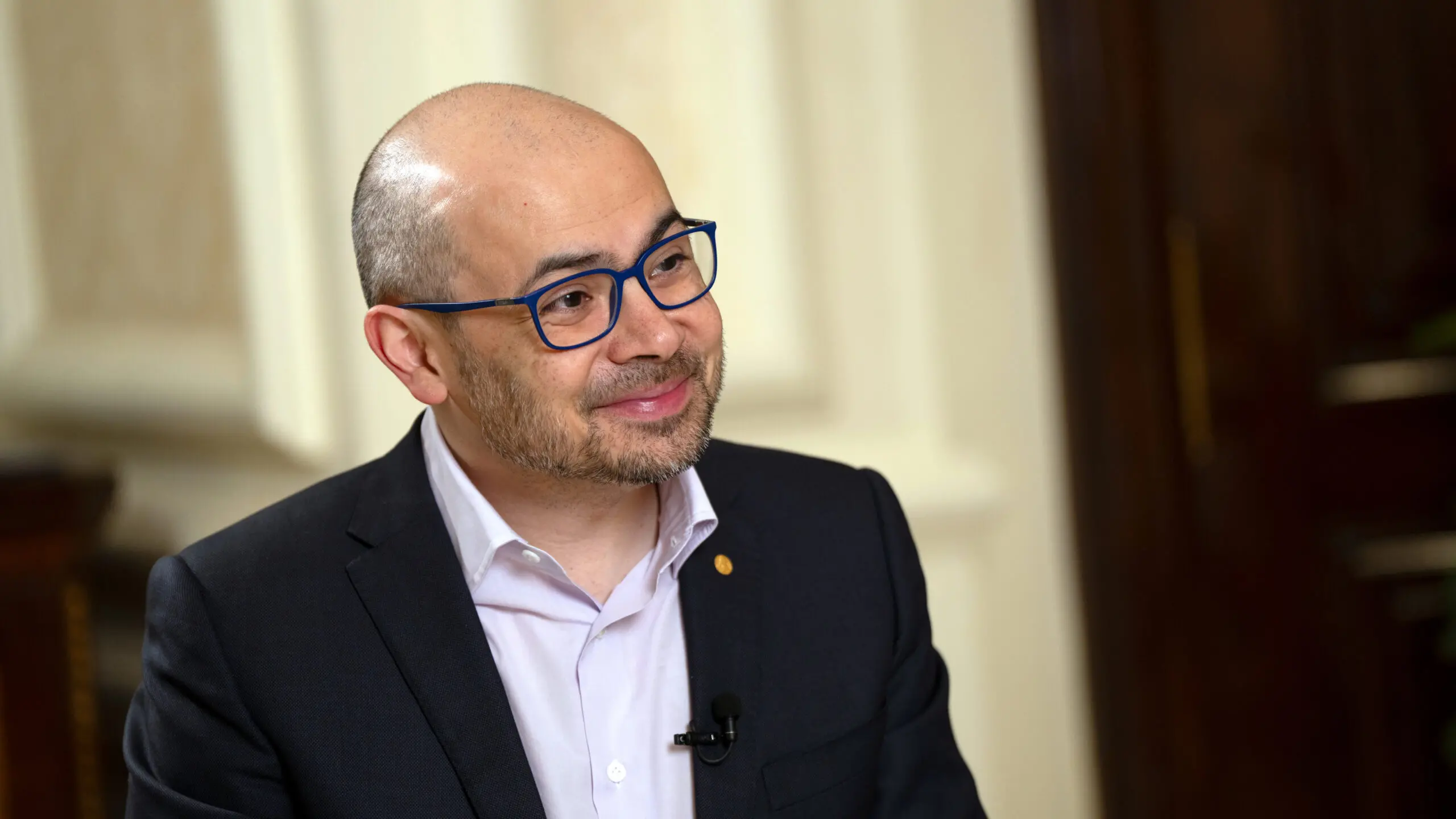
Google was caught off guard when Microsoft unveiled its Copilot assistant and demonstrated how generative AI could be woven directly into the productivity software used by millions. At the time, Google’s search business seemed vulnerable, and its reputation as the industry’s AI pioneer was suddenly in question. A few years on, the picture has changed. Google has regained the initiative with its Gemini platform and remains one of the most important AI companies in the world. But internal turbulence is becoming harder to ignore. A wave of senior researchers has left, and Demis Hassabis, the CEO of DeepMind, is stepping back from day-to-day management to take a broader role at Alphabet.
Hassabis hands over the reins
Hassabis co-founded DeepMind in 2010 with Shane Legg and Mustafa Suleyman. The company was acquired by Google in 2014 and has since become the centerpiece of the search giant’s AI strategy. DeepMind’s breakthroughs include AlphaGo, AlphaFold, and the underlying research behind Gemini. Hassabis has been the public face of the lab and one of the most prominent figures in the global conversation about artificial general intelligence, or AGI, the hypothetical point at which machines can perform any intellectual task that a human can.
In a memo to staff, Hassabis explained that he is moving into an oversight role at Alphabet, Google’s parent company. He will become chair of DeepMind and chief scientist at Alphabet, while continuing to lead Isomorphic Labs, a DeepMind spinout focused on using AI for biomedical discovery. “I’ve been working towards AGI my whole life and now, like many of you, I feel it is close at hand,” Hassabis wrote.
His successor at DeepMind will be Koray Kavukcuoglu, who has served as a research director at the lab and was closely involved in building the models that power Google’s AI products. Kavukcuoglu will hold the title of senior vice president and report directly to Sundar Pichai, Google’s CEO. The move is not a departure in the traditional sense; Hassabis remains at the company and will still have a hand in scientific direction. But the shift signals a reorganization at the upper levels of Google’s AI operation.
Hassabis has long argued that AGI is not a far-off fantasy but an imminent milestone, and his language in the memo reflects a belief that the field is entering its most important phase. His new role allows him to focus on the strategic and scientific questions that span Alphabet rather than the operational demands of running DeepMind day to day.
Four top researchers head for the exit
The leadership change came at the same time as a more striking development: four of Google’s most respected AI researchers are leaving to start their own company. Quoc Le, Oriol Vinyals, Jeff Dean, and Sanjay Ghemawat have founded Discovery Loop, a startup that plans to use AI to automate scientific discovery. The company has been structured as a public benefit corporation, a legal form meant to balance profit with public good. OpenAI and Anthropic use similar structures, a detail that has raised eyebrows given the criticism those companies have faced for the potential risks of their technology.
Jeff Dean is perhaps the most consequential departure. He was Google employee number 30 and helped build the infrastructure that turned the company’s search engine into the dominant information service of the internet age. Over the years, Dean worked on systems ranging from MapReduce to TensorFlow, and he has been central to Google’s AI efforts in the past decade. Along with Vinyals, he played a key role in designing Gemini models, which now sit at the heart of Google’s consumer and cloud products.
Quoc Le’s name is well known among machine learning researchers for contributions to deep learning, including work on convolutional networks and sequence-to-sequence learning. Oriol Vinyals is similarly regarded, having contributed to the development of transformer-based models and other advances that underpin contemporary AI. Sanjay Ghemawat is a longstanding engineer who co-created many of Google’s core distributed systems alongside Dean.
According to a detailed report about the matter, Google CEO Sundar Pichai made an effort to keep the group together. He held multiple meetings with the researchers, especially Dean and Ghemawat, in an attempt to persuade them to stay. The effort failed. Discovery Loop’s funding reportedly rested largely on the reputations of its founders, allowing the startup to raise capital without needing a fully formed product. The company’s mission is ambitious: to build AI tools that can accelerate the pace of scientific experiments and discovery. It is a goal that aligns with the kind of moonshot thinking that DeepMind itself was known for in its early years.
A troubling pattern of departures
These exits are not isolated. Earlier in the summer, Google lost Noam Shazeer, a vice president of engineering and co-lead of Gemini. Shazeer was the lead author of the 2017 paper “Attention Is All You Need,” which introduced the transformer architecture that almost every modern generative AI system relies on. He is now at OpenAI, a major blow to Google given that transformer technology emerged from its own research labs.
Around the same time, John Jumper, a DeepMind vice president, left for Anthropic. Jumper was one of the key people behind AlphaFold, the AI system that solved a decades-old problem in biology by accurately predicting protein structures. He was later joined at Anthropic by Jonas Adler and Alexander Pritzel, two DeepMind senior researchers who were reportedly important in getting Gemini off the ground. Those departures gave Anthropic a deep well of expertise at a time when it was racing to release its Claude models.
Pichai’s public statement after the latest changes struck a confident tone. “We’ve got amazing talent, world-class compute, and products that bring AI to more people than any other company,” he said. That may be true, but the talent pipeline is now showing visible cracks. Losing a single senior figure is one thing; losing a group of researchers who helped shape the modern AI landscape is another.
Momentum stumbles at a critical moment
The staffing changes come at a delicate moment for Google’s AI roadmap. For much of the past year, Google appeared to be closing the gap between Gemini and the frontier models released by OpenAI and Anthropic. At its I/O developer conference in the spring, the company announced that Gemini 3.5 Pro, its next flagship model, would arrive in June. That date came and went. Months later, Google has only released the smaller Flash models, not the top-tier system that was promised.
OpenAI and Anthropic, meanwhile, have continued to ship new models at a rapid clip. Some of those models have been criticized for their aggressive behavior and safety concerns, but they have nonetheless captured the attention of the market and the imaginations of developers. Google’s delay, combined with the departure of senior researchers, raises questions about whether the company can maintain the momentum it worked so hard to reclaim.
There is no single explanation for why so many people are leaving. Some may be pursuing the allure of a startup, where they can have more control and a direct stake in the outcome. Others may be responding to the changing culture at Google, including its growing closeness with the Trump administration, which has reportedly become a source of friction inside the company. Still others may simply believe that the biggest opportunities in AI now exist outside a large corporation.
For Google, the immediate task is to keep its AI efforts on track while managing the perception that a brain drain is underway. The company still has a large roster of talented researchers, and Hassabis will continue to advise from his new post. But the departure of people like Jeff Dean, who is practically a legend inside Google, is not something that can be easily dismissed. The next year will show whether the shake-up is a healthy realignment or the beginning of a longer decline.
Source: Ars Technica News