

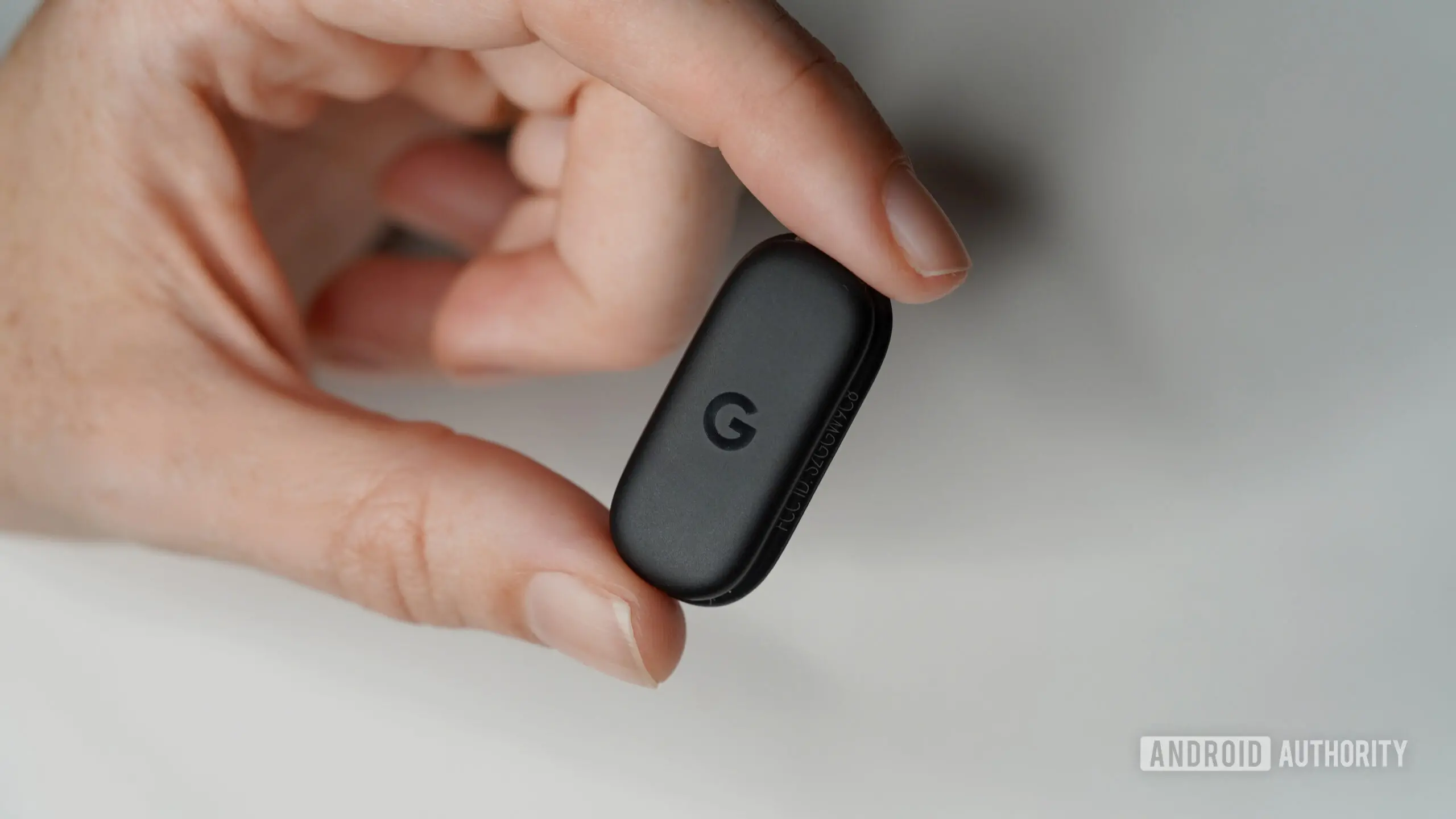
The Fitbit Air has always been a different kind of fitness tracker. It is small, screenless, and designed to fade into the background while passively collecting activity data. But some owners are taking minimalism to the next level: they are removing the tracker from its band entirely and attaching it directly to their bodies.
Reddit users have been sharing photos and stories of their bandless Fitbit Air setups. The trend appears to have emerged organically, with multiple people independently deciding that the tracker&8217;s small body could be worn without the official band. Instead of strapping it to the wrist, they are using athletic tape to secure the device to their bicep, chest, or other areas. One user claims they simply place the tracker inside their sock and wear it around the ankle, and it still &8220;reads everything as normal.&8221;
This kind of experimentation is not officially supported by Fitbit, but it raises interesting questions about how wearable devices are designed, calibrated, and ultimately used by real people.
What Is the Fitbit Air?
The Fitbit Air is a relatively recent addition to the Fitbit product lineup. It was introduced as a low-cost, ultra-minimal wearable that focuses on the essentials: step counting, sleep tracking, and basic activity monitoring. It has no display, no touchscreen, and no smart notifications. Instead, it syncs silently with a smartphone app, giving users a birds-eye view of their daily movement and rest patterns.
Its design philosophy is built around being unobtrusive. The tracker is small and lightweight, and it is meant to slip under a sleeve without drawing attention. The original band keeps it secure on the wrist, which is the standard placement for most wearable devices. Because the wrist is where most people naturally expect a fitness tracker, nearly all manufacturers calibrate their sensors and algorithms based on wrist motion.
That is why the new reports are so surprising. If a tracker is designed for the wrist, you would expect placing it on a bicep or inside a sock to affect its accuracy. Arm movement, leg movement, and body position all produce different acceleration patterns. Yet the users reporting these bandless methods say they have not noticed any major changes in their step counts, calorie estimates, or sleep data.
How Users Are Going Bandless
The most common method among the Reddit posts involves popping the Fitbit Air tracking unit out of its silicone band. The unit itself is sealed and compact, with no exposed connectors that would make skin contact risky. Users then place the device on a flat area of skin and secure it with athletic tape, which is flexible, breathable, and designed for prolonged contact with the body.
One user demonstrated the setup on their bicep, where the tracker is easily hidden by a short-sleeved shirt. Another said they tape the device near their hip, which keeps it out of the way during workouts. A third uses a sock, slipping the tracker against the top of the foot or around the ankle. That method does not require any adhesive at all, though the user admitted they had to adjust the sock to keep the tracker from shifting during the day.
In every case, the tracker remains in contact with the body, which is necessary for its accelerometer and optical sensors to collect meaningful data. The Fitbit Air does not use a heart rate sensor, but it does rely on motion detection. By keeping the device pinned to the skin, users ensure that the accelerometer registers body movements rather than the jostling of a loose band.
Why the Wrist Has Been the Standard
The wrist has been the default placement for fitness trackers since the earliest pedometers evolved into digital wearables. There are several reasons for this. The wrist is easy to reach, easy to see, and generally unobtrusive. It also provides a stable platform for sensors, as the arm swings in a predictable rhythm during walking and running.
Most activity algorithms are trained on wrist motion. Step counting, for example, uses a threshold-based algorithm that looks for periodic peaks in acceleration, which are usually caused by arm swings. On the wrist, these signals are fairly strong and consistent. On other parts of the body, the acceleration pattern changes. A bicep moves less dramatically than the wrist, while an ankle moves more regularly but with a different cadence.
Despite these differences, the Fitbit Air appears to handle alternative placements surprisingly well. That may be because the device uses a relatively simple motion-processing pipeline that does not overfit to wrist-specific signals. It might also be because the users who shared their experiences are not doing precise comparisons with a control device. Still, the anecdotal evidence is encouraging for anyone who wants more flexibility in how they wear their tracker.
Is It Safe?
Security and skin safety are important considerations when attaching a device directly to the body. Fitbit does not recommend this practice, and there are some potential risks. Adhesive tape, even athletic tape, can cause skin irritation, especially if worn for long periods. Sweat can get trapped under the tape, leading to rashes or discomfort. Some tapes also have latex or other allergens that can trigger adverse reactions.
Users who have tried the bandless method emphasize that you should only use tape that is specifically labeled for skin contact. Standard duct tape, packing tape, or masking tape should never be used, as these are not breathable and may leave sticky residues or cause skin damage. Even with skin-safe tape, it is wise to rotate placement spots to avoid constant pressure on the same area.
The device itself is sealed, so sweat is not likely to damage it in the short term. However, prolonged exposure to moisture may eventually affect the adhesive or the device&8217;s internal seals. It is also worth remembering that removing the tracker from its band may void the warranty, depending on the terms of sale.
What This Means for Wearable Design
The bandless trend is a small but telling example of how users adapt products to their own needs. Even though the Fitbit Air was designed for the wrist, some people find the wrist inconvenient. They may work in environments where jewelry or wrist-worn devices are not allowed. They may simply prefer the feeling of a bare wrist. Or they may want to avoid drawing attention to the fact that they are wearing a health tracker.
Fitbit itself has shown interest in flexible form factors. The Fitbit Air&8217;s screenless design is already a step away from the smartwatch-heavy direction of the industry. The ability to detach the tracker body from the band and wear it almost anywhere expands the potential user base, even if it is not officially encouraged.
There is also a broader cultural shift toward invisible health monitoring. Consumers are becoming more comfortable with wearing sensors on different parts of their bodies. Smart rings, chest straps, armbands, and even smart clothing are increasingly common. The idea of a tracker that can be tucked into a sock or taped to a bicep fits perfectly with that trend.
How to Try It Yourself
If you own a Fitbit Air and want to experiment with bandless wearing, there are a few simple steps to follow. First, clean the area of skin where you plan to place the tracker, and dry it completely. Cut a piece of skin-safe athletic tape that is slightly larger than the back of the tracker. Press the tracker onto the skin, then apply the tape over the top. Make sure the tape is not too tight, as this can restrict movement or cause chafing.
Check the tracker periodically to ensure it has not moved. If you feel any itching or irritation, remove the tape immediately and let your skin recover. For ankle or sock placement, place the tracker against your skin and pull the sock over it. A snug sock will hold it in place, though you may want to use a thin piece of tape for extra security.
You should also check the Fitbit app after a day of wear to see whether your step counts and sleep patterns still look reasonable. If anything seems significantly off, you may need to return to the wrist or try a different placement. The app may not have a setting for bandless mode, but it can still sync data from the tracker as long as the device is within range.
Community Reactions
The reaction to the bandless trend has been generally positive. Many Reddit readers have praised the creativity of the idea, while others have shared their own variations. Some say they only wear the tracker during workouts, taping it to their chest or back. Others use it as a sleep tracker, attaching it to their ankle and leaving it there overnight. A few have even tried wearing two trackers in different locations to compare data, though that is probably overkill for most people.
There have also been skeptics who question whether the data is really as accurate as the users claim. Without a controlled test, it is hard to know for sure. But the fact that these users are satisfied with the results is enough for them. Fitness trackers are personal tools, and the best way to wear one is whatever works for you.
The Fitbit Air&8217;s flexibility is a reminder that technology does not have to dictate how we live. A tracker designed for the wrist can still find a home on an ankle, a bicep, or inside a sock. As long as it stays on the body and keeps collecting data, the definition of a fitness tracker can remain open to interpretation. That is a lesson that goes beyond one product.
Source: Android Authority News