

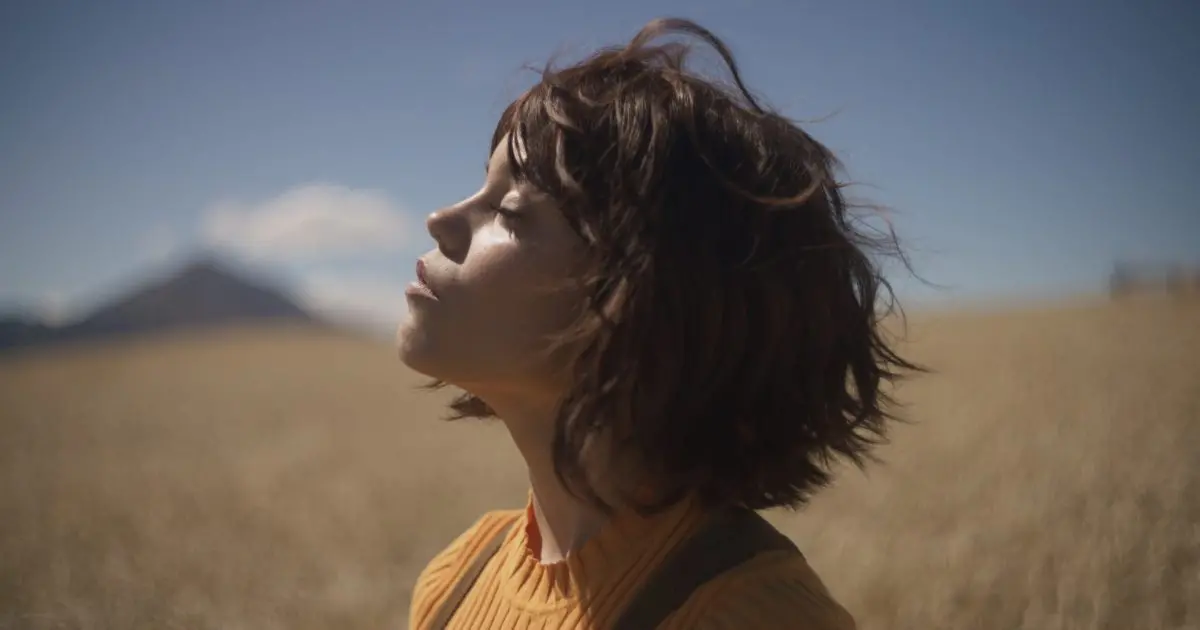
Artificial intelligence is no longer a distant science-fiction promise. It already shapes how people work, learn, shop, and communicate. But Taika Waititi’s new film Klara and the Sun asks a more uncomfortable question: what happens when AI is treated not as a tool but as a substitute for the people we love? Based on Kazuo Ishiguro’s novel, the movie follows Klara, a solar-powered “Artificial Friend” played by Jenna Ortega, as she bonds with Josie, a seriously ill teenager. The premise sounds gentle, even whimsical, but the story uses that tenderness to examine replacement anxiety, loneliness, and the pressure to become more efficient than a machine.
Key Facts at a Glance
- Title: Klara and the Sun
- Director: Taika Waititi
- Source material: Kazuo Ishiguro’s novel of the same name
- Central character: Klara, a solar-powered Artificial Friend
- Key cast: Jenna Ortega as Klara, Amy Adams as Chrissie, Rachel House as Melania, and Aran Murphy as Rick
- Core themes: AI companionship, human replacement, perfectionism, loneliness, and the value of imperfect connection
- Release: The film premieres in theaters on October 23
The film is being described as an unusual blend of The Wizard of Oz and Blade Runner. Waititi’s visual style brings vibrant color and quirky humor to a dystopian setting, but the playful surface does not soften the story’s darker implications. Beneath the fantasy imagery and eccentric characters, Klara and the Sun is concerned with whether artificial intelligence can deepen human connection or whether it will accelerate the erosion of it. The movie does not present AI as an all-powerful conqueror. Instead, it shows a society that is already willing to hand over emotional and practical roles to machines, often for reasons that feel uncomfortably familiar.
A Different Kind of Artificial Intelligence
Klara is not the familiar sci-fi android who begins with godlike intelligence and a complete understanding of the world. She is more like a child in a robot body. When audiences meet her, she is still learning how to walk, how to interpret her surroundings, and how to understand the people who might choose her. She lives in a store with other Artificial Friends, each with its own quirks, but Klara stands out because of her childlike wonder and optimism. She sees the Sun as a kind of deity, imagines it living in a barn, and treats it as something that might answer her prayers.
That depiction makes Klara unusually sympathetic. She is not cold or calculating. She is eager for affection, sometimes almost doglike in her excitement and anxiety, but the film does not reduce her to a dim-witted pet or a hollow machine. Like any person, she grows through experience. At first, she struggles to calibrate herself to the outside world. Later, she learns to venture out on her own in the hope of helping Josie recover. Her development matters because it challenges the assumption that intelligence must be measured only by processing power. Klara’s value comes from attention, patience, and care.
This is a sharp contrast to films such as The Terminator and The Matrix, where AI is a threat that seeks to dominate or destroy humanity. Klara and the Sun imagines androids that can be gentle, vulnerable, and devoted. The mechanical hero offers love and hope to the people in her care, even as the humans around her reveal their own fears and flaws. The film’s most unsettling questions do not come from Klara’s potential to become dangerous. They come from the human characters’ willingness to use her as a replacement for someone irreplaceable.
The Fear of Being Replaced
In an era when AI is entering the workforce and people have lost jobs across creative and professional fields, Klara and the Sun taps into a widespread fear of being made obsolete. That fear appears early in Josie’s household. The housekeeper, Melania, dislikes Klara as soon as the Artificial Friend arrives. Her hostility is not simply about a new gadget in the home. It is about the possibility that a machine could take over duties, attention, and even affection that once belonged to a person.
The film does not limit that anxiety to employment. Josie feels it too. As her health worsens, she watches her mother, Chrissie, and her boyfriend, Rick, spend more time with Klara. The android can imitate voices and mannerisms, which makes her a near-perfect substitute for Josie. That ability creates tension between the two, because Josie is already desperate to find a place where she belongs. The person who is supposed to be cared for begins to feel as though she is being quietly replaced by the machine that was brought in to help her.
The story eventually reveals that Chrissie has a plan that is far more disturbing than simple companionship. She intends for Klara’s mind to inhabit a robotic copy of Josie so that some version of her daughter can “live on” after the real Josie dies. It is a terrifying idea, not because the technology is impossible to imagine, but because it turns grief into a problem to be solved by substitution. A parent trying to replace a child with a machine is an extreme scenario, yet the film uses it to dramatize a broader cultural impulse: the belief that anything human can be optimized, copied, or replaced if the technology is advanced enough.
When Humans Are Asked to Compete With Machines
Chrissie’s behavior adds another layer to the film’s warning. She does not only try to replace humans with machines; she also pushes her daughter to compete with them. A severe perfectionist, Chrissie uses genetic “lifting” to make Josie more efficient, giving her advanced academic abilities that might rival a machine’s. The process is meant to give Josie an edge in a world that increasingly values speed, precision, and productivity. Instead, it slowly kills her.
That detail is central to the film’s argument. The danger is not simply that AI might become too much like a person. The deeper fear is that people will be pressured to become less human in order to keep up. Employers and businesses already favor automated systems because they can complete certain tasks faster and more cheaply than people. In Klara and the Sun, both Klara and Josie are expected to change themselves to meet the demands of a society that prizes efficiency above all else. Klara is a discontinued model, considered “too humanlike” and “too empathetic.” Her supposed flaws make Chrissie dislike her, because Chrissie prefers a more advanced model. Meanwhile, Josie is pushed toward machine-like perfection and suffers for it.
The film therefore reframes the usual AI debate. The most frightening possibility is not that machines will become human. It is that humans will be asked to abandon the qualities that make them human. Empathy, slowness, vulnerability, and imperfection become liabilities in a culture that demands constant optimization. Klara and the Sun warns against replacing the people around us with machines, but it also warns against treating people as though they should function like machines.
Can AI Be a Real Friend?
At the center of the story is Klara’s friendship with Josie. Their relationship raises difficult questions about loneliness and companionship. In the film’s world, the Internet was taken down after its role in starting World War III. With the online connections that once sustained people removed, Artificial Friends become a solution to isolation. It makes sense that families would buy these androids to combat loneliness, especially when human relationships are strained, distant, or painful.
Yet the film refuses to treat AI as either a simple savior or a simple villain. Klara does provide Josie with friendship. She offers attention, comfort, and hope. But she cannot fill the emptiness left by Josie’s distant mother. Instead, Klara helps mother and daughter move toward repairing their broken relationship. Technology alone does not solve their problems. The real change comes when Chrissie and Josie communicate their feelings and learn to understand each other.
The movie also shows how easily androids can be treated as disposable. Some characters see Klara as replaceable, comparable to a servant or a pet who can be returned or abandoned in the wilderness. Even as Klara cares deeply for Josie, the humans around her are capable of discarding her when she no longer seems useful. That contradiction is part of the film’s unease. People want machines to be loving and loyal, but they do not always want to extend the same consideration back.
The film’s final emphasis is not on whether Klara is human enough, but on whether the humans around her are willing to remain humane. Klara may be artificial, but her bond with Josie is real and meaningful. The warning is aimed less at the machine than at the society that builds it: a society that demands perfection, treats people as interchangeable, and forgets that accepting one another’s imperfections is what makes love possible.
Source: Digital Trends News