

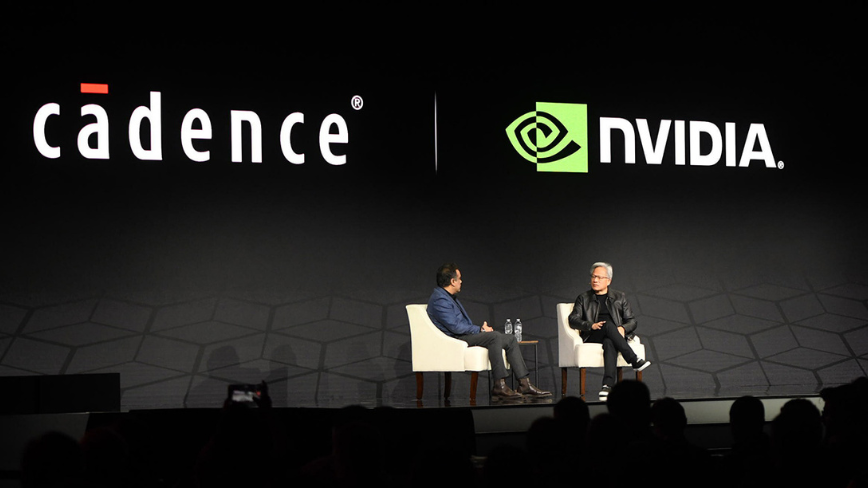
Cadence Design Systems and Nvidia have unveiled an expanded partnership during a conference in Santa Clara, California, with the aim of enhancing the accuracy of robot training data, thereby accelerating the real-world deployment of physical AI systems.
This collaboration addresses a significant challenge in the robotics field: the discrepancy between how robots learn in computer simulations versus their actual performance in the physical world. The partnership integrates Cadence's sophisticated physics simulation engines with Nvidia's leading AI training platforms, including the Isaac open-source simulation libraries and Cosmos open-world models.
Cadence is widely recognized as a key provider of software for designing advanced computing chips. However, the company also specializes in physics engines that effectively model the interactions of real-world materials, including how metals deform, how fluids flow, and how surfaces make contact with one another. These advanced simulations, traditionally used in sectors such as aerospace, automotive, and semiconductor design, are now being repurposed to generate the essential training data that robotic AI systems require for effective learning in handling objects and navigating their environments.
Training robots in simulated environments is not only quicker but also more cost-effective than real-world training. However, the quality of this training data is heavily reliant on the precision of the physics engine employed. “The more accurate the generated training data is, the better the model will be,” stated Cadence CEO Anirudh Devgan during the conference.
Nvidia CEO Jensen Huang elaborated on the scope of their collaboration, affirming, “We’re working with you across the board on robotic systems.” This partnership aims to create a cohesive stack that combines Cadence's multiphysics simulation capabilities with Nvidia's model training processes, facilitating deployment on Nvidia's Jetson robotics and edge AI hardware.
The resulting workflow will streamline the process from world-model training through physics simulation to feedback from real-world deployment, all managed by AI agents throughout the lifecycle. This initiative is part of a broader trend of Nvidia forming deep simulation partnerships across various aspects of industrial engineering. The company has also announced collaborations with Siemens and Dassault Systèmes to develop industrial AI platforms and create virtual twins.
For Cadence, this application in robotics signifies a substantial expansion of its simulation software into the AI infrastructure layer, especially at a time when the demand for accurate robot training data is rapidly increasing. As robots become more integral to various industries, the need for reliable training methods and realistic simulations will continue to grow, making partnerships like the one between Cadence and Nvidia crucial for future advancements in robotics.
Source: TNW | Business News