

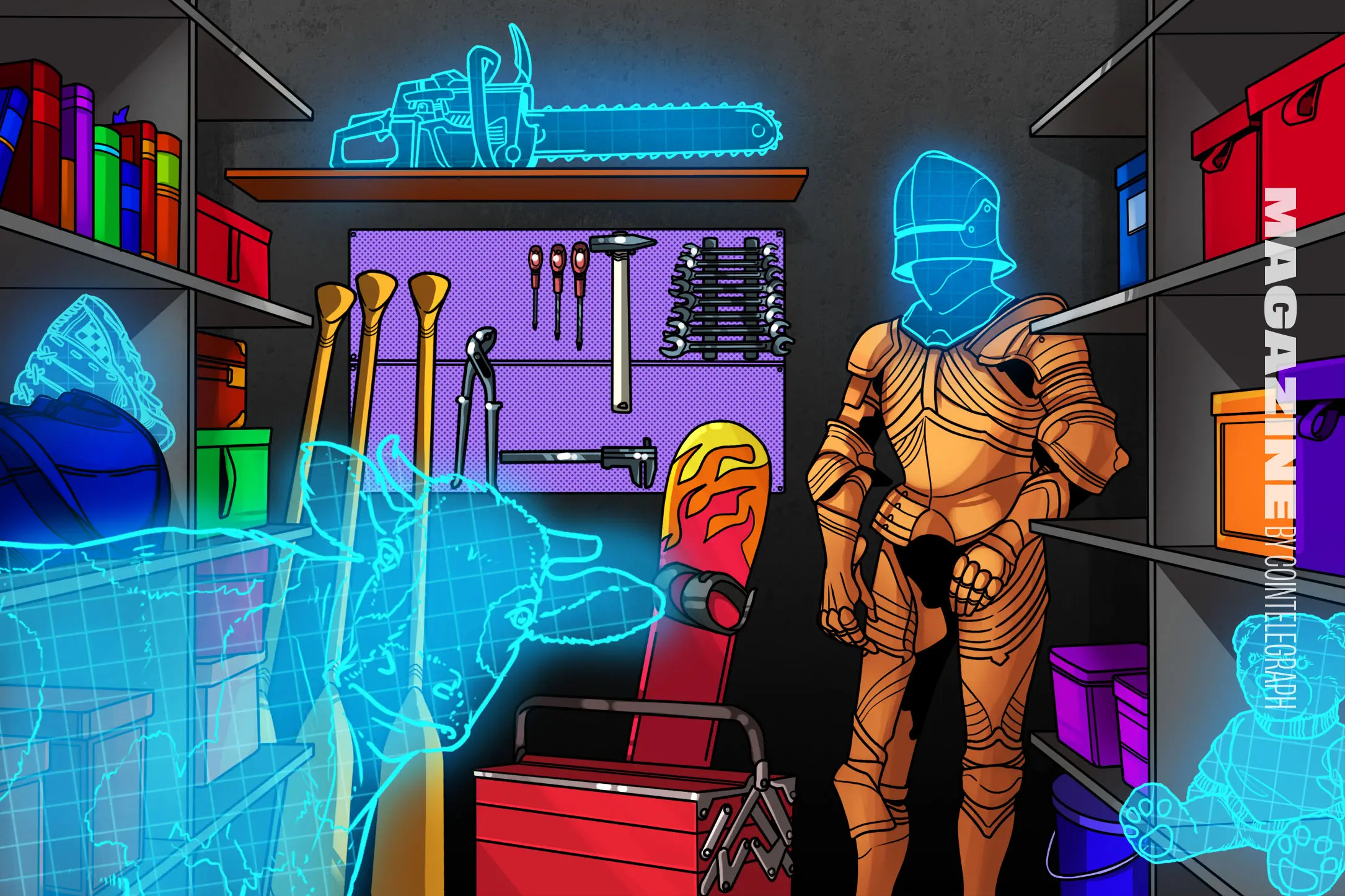
Tokenization has moved far beyond digital art and crypto-native collectibles. Real-world asset tokenization is now one of the fastest-growing areas of blockchain, promising to make everything from real estate and bonds to cows and even flatulence tradable onchain. The concept is simple: an asset is converted into a digital token that can be bought, sold, or used as collateral. But the practical applications have proven stranger than almost anyone expected.
Brazil's B3 stock exchange made headlines last month when tokenized cows went viral. A farmer in southern Brazil used 10 cows as collateral for a 100,000 Brazilian real ($19,600) loan by moving them into a blockchain-based holding pen. The deal was structured by Brazilian investment fund Target FIDC, giving each cow a unique digital token linked to an encrypted digital identity. It was a concrete example of how farmers can borrow against their livestock without selling it, and it raised an obvious question: if cows can be tokenized, what can't be?
BlackRock chief executive Larry Fink has famously said every asset will eventually be tokenized. He probably was not thinking about body parts or flatulence. Yet over the past few years, an extraordinary range of items have made their way onchain: a year's worth of farts, human skin, a burned Banksy, whiskey barrels, racehorses, uranium, and more. Here are 10 of the strangest things ever tokenized.
1. A Year's Worth of Farts
The strangest tokenization project may be the one built on methane. During the pandemic lockdowns, when people were baking bread or mastering Duolingo, filmmaker Alex Ramírez-Mallis turned his own digestive output into NFTs. He recorded his farts and minted each one as a separate nonfungible token, then sold them for 0.05 ETH each. At the time, that was roughly $85, which meant his year-long project could have generated modest income from something most people would rather forget. "They say farts are like children, and you only love your own," he joked. The novelty factor helped him attract buyers, proving that in the right context, even the most unappealing asset can have a market. It also demonstrated that nonfungible tokens can represent practically any kind of content, no matter how bizarre.
2. Cows
Better known in Bitcoin circles as a prime source of protein, cows are not the first thing that comes to mind when thinking about tokenized collateral. But that is exactly what happened in Brazil. Target FIDC, a Brazilian investment fund, structured a deal where 10 cows were given unique digital tokens linked to encrypted digital identities. Those tokens were then used as collateral for a 100,000 real loan, worth about $19,600 at the time. The farmer could keep using the cows for milk or meat while the lender held a secured claim on the blockchain. Although the initial loan was small, the proof of concept points to a future where around $80 million in livestock-backed financing could be supported across the fund's farms. With global agriculture generating roughly $4 trillion in value added in 2023, tokenized sheep, goats, and chickens may not be far behind.
3. Whiskey Barrels
Whiskey barrels are a natural fit for tokenization because Scotch whisky tends to increase in value as it matures. Several projects have begun putting whisky casks onchain, allowing investors to buy a whole cask or a fractional share of one. The physical barrel sits in a bonded warehouse while its digital twin is traded on a blockchain. This gives fans of whiskey a way to participate in the appreciation of a real asset without needing to store a barrel themselves. But there are caveats. As with other collectibles, the value depends on the legal agreement and the market structure, and if prices fall, there is no way to drink a digital JPEG of a barrel. Still, the category has attracted interest from investors looking for alternative assets that are uncorrelated with public equities.
4. Racehorses
Racehorse ownership has traditionally been reserved for the ultra-wealthy, with costs for breeding, training, and upkeep running into hundreds of thousands of dollars. Tokenization is slowly chipping away at those barriers. By dividing a real thoroughbred into digital shares, platforms allow investors to buy a fraction of a horse for a relatively small amount. Owners can share in prize money, breeding income, or proceeds from a future sale. This opens up a sport that was once closed to all but the richest enthusiasts. However, Chris Turner, co-founder of impact investment firm KULA, warns that putting an asset onchain does not automatically make it more liquid or valuable. The legal rights, transfer process, and market structure still need to work. If those remain inadequate, tokenization is just a wrapper around an illiquid asset.
5. Uranium
Uranium is an unusual commodity to tokenize, but that is exactly what Tezos-backed metals.io is doing. Tezos co-founder Arthur Breitman says blockchain technology excels at building reliable, auditable, and cost-efficient financial rails for any asset, and he sees a particular fit with "technology-flavored commodities" like uranium. Since uranium is used in nuclear power and has a complex supply chain, a transparent ledger can help track ownership and provenance. According to Breitman, trading volume between November 2024 and July 2026 reached $21.5 million across roughly 18,200 trades and 7,400 unique wallets. Growth is still modest, and institutional players have shown interest but remain "shy about tokenized rails." Nonetheless, the project shows that tokenization can extend beyond conventional assets into specialized industrial commodities.
6. Fishy Revenue
One of the more unusual proposals received by Brickken, a tokenization platform, came from a Chilean fish-processing company. The company wanted to issue tokenized debt with returns tied to the value of the fish it sold. The token would represent a lender's contractual claim, and interest payments would adjust according to the firm's verified sales performance. In effect, it was a tokenized, revenue-linked debt instrument. Brickken chief executive Edwin Mata says the proposal highlighted an important principle: almost any cash flow can support a tokenized financial instrument if the underlying rights and data can be independently verified. In the end, the fish never made it onchain. The sales data still relied on audits, commercial reporting, and legal agreements that could not be automated. The biggest obstacle to tokenization is often not the blockchain but the messy realities of the physical world.
7. Music Royalties
Music royalties have also found their way onchain. In 2021, DJ and producer 3LAU sold 50% of the streaming rights to his single Worst Case through his blockchain platform Royal. The following year, rapper Nas used Royal to sell streaming royalty rights to two of his songs, Ultra Black and Rare. These deals generated excitement during the NFT boom, but tokenized music royalties are still far from a mainstream asset class. One reason is that streaming services pay tiny amounts per play. An investor who owns 0.001% of a track might need five million plays to earn enough for a cup of coffee. The idea remains novel, but the financial returns have not yet caught up with the hype.
8. Human Skin
In 2021, Croatian tennis player Oleksandra Oliynykova took athlete sponsorship to a new level. She auctioned the advertising rights to a 15-by-18-centimeter patch of skin on her right arm as an NFT. The winning bidder paid 3 Ether, worth about $5,400 at the time, to choose the tattoo she would wear during tournaments for a year. Athletes have long sold space on shirts, helmets, and race cars, but Oliynykova turned her own body into advertising inventory. The stunt gave new meaning to the phrase "having skin in the game" and demonstrated that NFTs can represent not just digital files but also rights connected to physical spaces and personal exposure.
9. A Burned Banksy
Some art collectors preserve masterpieces; crypto collectors sometimes burn them. In 2021, a group calling itself Burnt Banksy bought a Banksy print titled Morons (White) for about $95,000. The group livestreamed the destruction of the physical artwork and then minted a token representing the burned piece. The logic was that while the physical object no longer existed, ownership would live forever on the blockchain. The NFT later sold for around $382,000, triggering a fierce debate about whether the group had destroyed art or created a new kind of performance piece. It may have been the first time in history that a "fire sale" produced a 300% profit for the seller.
10. The First Tweet
Also in 2021, Twitter co-founder Jack Dorsey tokenized his first-ever tweet, which read "just setting up my twttr." It was sold as an NFT to crypto entrepreneur Sina Estavi for $2.9 million and became a symbol of the NFT boom. A year later, Estavi tried to resell it for $48 million, but the highest bid he received was only around $6,800. Anyone can still read the tweet on X, but only one person owns the blockchain certificate tied to it. The enormous gap between the buying price and subsequent bids highlights how speculative and subjective NFT valuations can be. As Brickken CEO Edwin Mata put it: "Tokenization can improve access, administration, settlement and transferability, but it cannot transform a poor investment into a good one."
Source: Cointelegraph News